Security Guidance
Contents
- Why do we need to manage our premises?
- Responsibility
- Risk Assessment
- Manage Maintenance and people
- Accessibility
- Asbestos
- Chemicals and hazardous substances (COSHH)
- Construction Projects (CDM Regs)
- Electricity
- Equipment
- Fire Safety
- Food Safety
- Gas
- Height – activity above floor level
- Lifting and Carrying
- Lone Working on Site
- Security Guidance
- Trees
- Vehicles on Site
- Water
- Other Safety Management Considerations
Security Guidance
To keep your premises safe and secure while being prepared for any situation, you should check your plans regularly to make sure they work well for you. As part of this, talk to everyone involved and make sure they know the plans.
We recommend reviewing these points below:
-
Risk assessments: do they consider the low probability, but high impact of someone trying to cause harm?
-
Security arrangements: Are any in place, effective and communicated?
-
Emergency procedures: Are there any in place and regularly reviewed?
-
Communication: Are contacts up to date? Is this in line with the InTouch process?
-
Climate: Consider the local social climate, is there any advice from local authorities/police? Be prepared to cancel meetings, activities or camps at short notice. Be sensitive and take concerns seriously.
Practical considerations
As each circumstance is unique, here are some ideas to think about an effective review of your premises. We understand that not all points will be achievable, do whatever is reasonably practicable
-
Where are your entrance and exit points? How many will you have to consider?
-
What are the primary doors in use? Do these self-lock when they shut? (how will you make sure they don’t lock you out).
-
How do you monitor or control the arrival and departure process? Is it possible to have a leader stand at the door as people enter and exit?
-
Can a password be introduced for adults that the leaders don’t know, when collecting young people?
-
At the end of your session, remind all young people not to leave unless the correct person is there to collect them.
-
Run through a scenario with your volunteers to ensure all aspects are covered.
If you own your premises, consider:
-
What ways are there to secure your boundary line; is it possible to fit locks on gates (allowing for safe emergency escape)? Is there a perimeter fence and is it an appropriate height?
-
Is it possible to put motion detecting lights in areas considered a higher risk?
-
Can door chimes or a simple door alarm be fitted to doors to monitor the opening and closing of the primary door, or any doors that are out of sight? This can also help with wandering section members.
You should think about these options with the fire risk assessment, and ask fire safety experts if needed: If there is a fence around the building that can be locked, you might stop intruders from getting in. But there must also be a safe way out, like a push bar or button on the gate, so everyone can get to the fire assembly point if there's a fire.
Good practice:
-
Consider contacting your County Safety Advisor for extra support.
-
Other local Scout groups in your group/district/county may have implemented measures, it is useful to share for good practice.
-
Consider engaging with external youth services in the area to review local strategies that have been used.
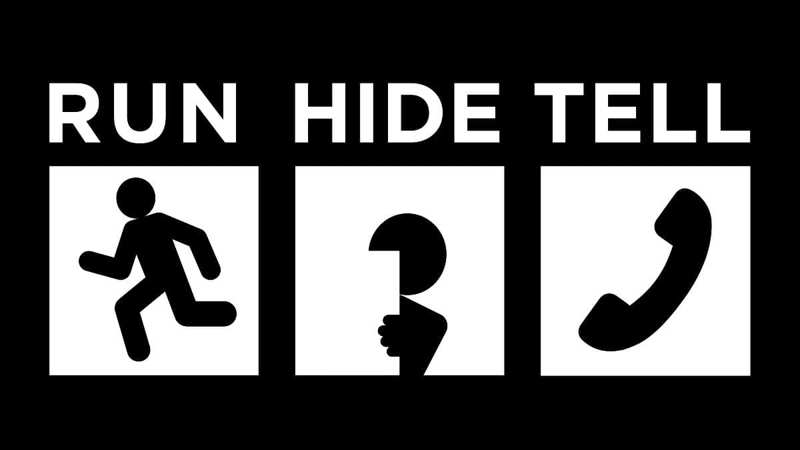
In the very rare event of an incident: Run, Hide, Tell
RUN to a place of safety. This is a far better option than to surrender or negotiate. If there’s nowhere to go, then…
HIDE It’s better to hide than to confront. Remember to turn your phone to silent and turn off vibrate. Barricade yourself in if you can. Then finally and only when it is safe to do so…
TELL the police by calling 999.