Using Challenge Awards as ICV Projects
Using Challenge Awards as ICV Projects
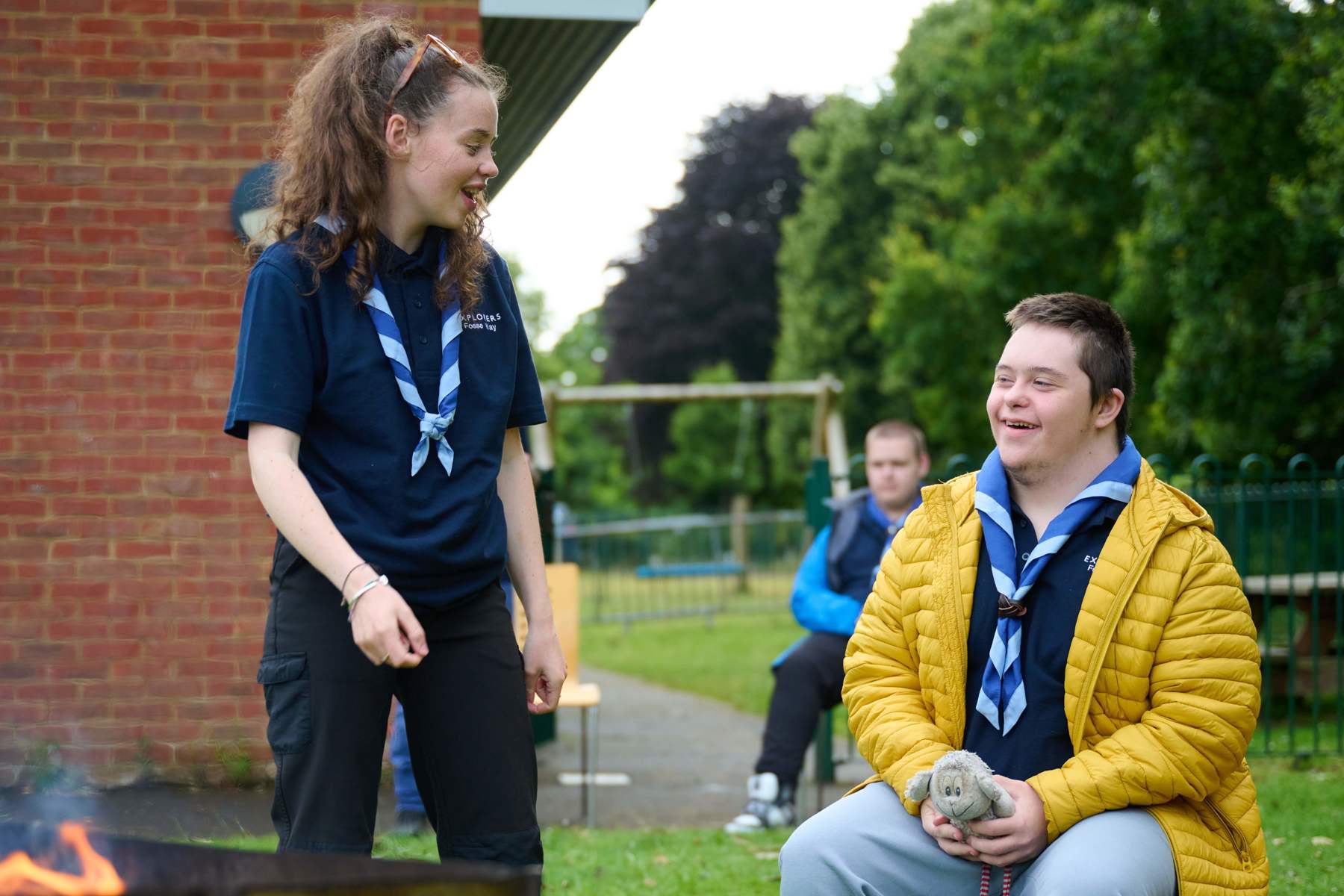
If you’re working towards the Chief Scout’s Platinum Award, Chief Scout’s Diamond Award, or the King’s Scout Award, you need to complete International, Community and Values (ICV) activities.
You don’t always need separate ICV projects. Challenge Awards can also count as ICV activities, as long as they meet the expected level of challenge, effort and personal development.
The activity itself is less important than whether it meets the right standard for the award level.
Progression across the awards
ICV activities should develop over time as you move through the awards.
From Platinum to Diamond to the King’s Scout Award, your projects should show increasing:
- Time commitment
- Responsibility
- Independence
- Impact
This progression should be clear whether you complete standalone ICV projects or use Challenge Awards.
There is no fixed time requirement for ICV activities. However, they should involve a meaningful level of effort and commitment.
A useful guide is:
- Chief Scout’s Platinum Award: 4 to 6 hours
- Chief Scout’s Diamond Award: 8 to 10 hours
- King’s Scout Award: 12 to 14 hours
These timings are not strict limits. They are intended to help you judge the scale and level of challenge.
Activities should:
- Be challenging, but not overwhelming
- Involve more than a short, one-off task
- Be appropriate to your experience
If needed, activities should be adapted with support from a leader or mentor.
Using the Experience Principles
Challenge Award projects are shaped using the Experience Principles:
- Discover
- Create
- Solve
- Mobilise
- Experience
- Reflect
These principles provide a simple structure for planning and carrying out a project. They help make sure the activity is balanced, purposeful and focused on learning.
All Challenge Award projects should include each of these principles. They are not separate tasks, but ways of thinking about:
- What you’re trying to find out (Discover)
- What you will design or develop (Create)
- How you deal with challenges (Solve)
- How you involve and organise others (Mobilise)
- What you actually do (Experience)
- What you learn from it (Reflect)
Building challenge through the Experience Principles
The level of challenge does not come from using different principles, but from how they are applied.
As you progress through the awards:
- Work through the principles with support
- Tasks are more structured and guided
- Reflection focuses on what happened and what was learned
- Take more responsibility for applying the principles
- Have a clearer role in planning (Create) and organisation (Mobilise)
- Begin solving problems more independently
- Reflection shows deeper understanding
- Use the principles with a high level of independence
- Lead others through Mobilise and manage delivery
- Adapt plans in response to challenges (Solve)
- Reflect in detail on impact, learning and next steps
Using the principles in this way helps to stretch the same project idea, making it appropriate for different award levels.
Expectations at each level
Participation
- Take part in an activity or project
- Work with support from leaders or others
- Limited responsibility for planning
- Around 4–6 hours commitment
Focus on getting involved and developing awareness.
Contribution
- Take an active role in planning or delivery
- Be responsible for part of a project
- Show increased independence
- Around 8–10 hours commitment
Focus on taking responsibility and developing skills.
Leadership
- Lead or manage a project
- Take responsibility from planning through to completion
- Demonstrate independence and impact
- Around 12–14 hours commitment
Focus on leading and making a difference.
Using Challenge Awards
When using a Challenge Award as an ICV activity:
- Make sure it meets the expected time and level of challenge
- Check that your role shows the right level of responsibility
- Use the experience principles to plan and structure your project
- Build on what you have done previously
For example:
- Platinum: take part in a project
- Diamond: contribute to planning and delivery
- King’s Scout Award: lead and manage the project
Summary
Challenge Awards can be used as ICV activities at all three levels.
What matters is that the project:
- Uses the experience principles to give it structure
- Meets the recommended level of time and challenge
- Shows clear progression in responsibility and impact
Each stage should build on the last, helping you develop skills, confidence and experience as you work towards your top award.