
Cook pork and apple burgers
You’ll need
- Ingredients (see recipe)
- Measuring scales
- Knife
- Chopping board
- Baking trays
- Mixing bowls
- Spoons (for mixing)
- Coarse grater
- Access to oven
- Access to sink
- Washing up liquid
- Heatproof gloves
- Heatproof tongs or spatula
- Plates and cutlery (for serving)
- First aid kit, including for burns
- A way to put a fire out, such as a fire extinguisher
Before you begin
- Use the safety checklist to help you plan and risk assess your activity. There’s also more guidance to help you carry out your risk assessment, including examples.
- Make sure all young people and adults involved in the activity know how to take part safely.
- Make sure you’ll have enough adult helpers. You may need some parents and carers to help if you’re short on helpers.
- Check for allergies, intolerances, fasting, food-related medical conditions, eating problems, food sensitivities or dietary requirements, then adjust the food items used as needed. This may include making sure there’s no cross-contamination of packaging and no cross-contamination during the storage, preparation, cooking and serving.
- You may need to use separate chopping boards, equipment and utensils, such as tongs or toasters, for different dietary requirements, allergies and foods.
- If you’re unsure, check with the young person and their parents or carers. You can check with the adult directly if it’s a volunteer or helper.
- Some people may not like certain food textures or tastes and that’s OK. People don’t need to use all the ingredients if they don’t want to, and no-one should be made to try foods if they don’t want to. You can try to find an alternative for them.
- Read our guidance on food preparation.
- Always have a hand washing station, washing hands regularly throughout this activity, and taking extra hygiene precautions when handling food. If you're using gloves to prepare food, treat them like your hands. Wash any gloves before using them and in between if necessary.
- Spray and wipe down all working surfaces and tables with anti-bacterial spray before and after use, and wash any equipment you’re using in hot soapy water.
- Take extra hygiene precautions when handling raw meat, such as regular hand washing.
- Keep raw and ready-to-eat foods separate, having separate equipment for raw and cooked meat, and washing up equipment as soon as it's been used.
- Make sure food is properly cooked before you serve it. Always cut through poultry and meat to make sure it's fully cooked, especially when barbecuing food. Make sure it's cooked slowly and thoroughly, and not just done on the outside.
- Always follow cooking instructions and never use food past its use-by date.
- Keep food out of the fridge for the shortest time possible.
- At the start of this activity, remind everyone of kitchen or indoor cooking safety rules and how to act safely. Always tie hair back, tuck in neckers and loose clothing, and wear closed toe shoes. Read our guidance for food safety.
- You may want to run a demonstration on how to use the equipment safely, such as for cooking or chopping ingredients. You could use our kitchen safety activities before this session.
- Make sure any cooking equipment or heat sources, such as ovens and hobs, always have adult supervision, including during free time and arrival times. If anyone struggles with sensing danger, you should consider providing extra adult supervision. This could be especially helpful at unstructured times, such as breaks or waiting to cook.
- Remind everyone to keep their fingers away from any knives. You may want to use blunt, child-friendly knives, or you could also have ingredients pre-chopped.
- If you’re using a gas stove, tabletop hob plates or a mini oven, make sure it’s on a stable heatproof surface and in a clear and open area, with plenty of ventilation. Gas appliances and sources can increase risk of carbon monoxide exposure. You can read our guidance on different cooking methods and carbon monoxide.
- You may want to put child-safe locks on cupboard doors to prevent access by young people, especially for cupboards containing matches, cleaning products or chemicals.
- People can work in small groups or as a whole group to bake or cook. Each group should have adult supervision.
- You may want to be in groups, but everyone to use the same cooking source, rather than having each group have their own.
- You may wish for groups to make or prepare the ingredients in a wider, more spacious area, then invite each group into the kitchen to cook one at a time.
- Remember the groups not using the kitchen or cooking will still need to be supervised, always following the Yellow Card.
- Make sure you have all the ingredients ready. You may want to pre-chop or pre-measure some ingredients.
Planning and setting up the activity
- Remember to give a safety briefing for the cooking equipment and methods you’re using. You may wish to demonstrate the methods or activity before you all start cooking.
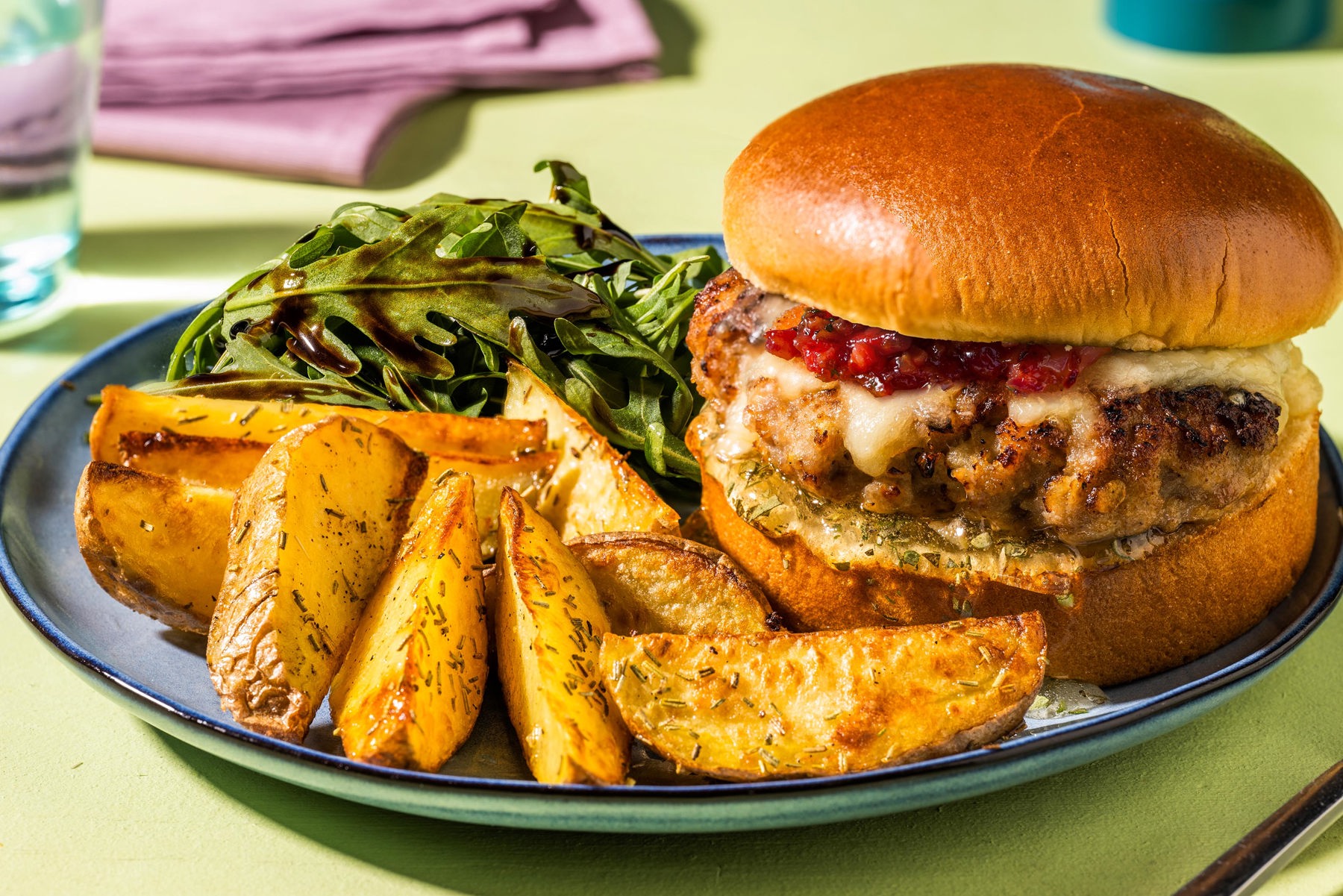
Ingredients
- 900g white potatoes
- Dried rosemary
- Apple
- 4 garlic cloves
- 20g breadcrumbs
- 500g pork mince
- 60g cheddar cheese
- 4 burger buns
- 50g apple & sage jelly
- 40g wild rocket
- Salt and pepper
- Cooking oil
Prep time: 20 minutes
Cook time: 40 minutes
Serves: 4
Make the rosemary wedges
- Preheat your oven to 220°C (200°C fan) or gas mark 7.
- Chop the potatoes into wedges about 2cm wide. There's no need to peel the potatoes.
- Pop the wedges onto a large baking tray. Drizzle with oil, sprinkle over the dried rosemary and season with salt and pepper.
- Toss to coat the wedges, then spread out into a single layer. You can use two baking trays if needed.
- When the oven is hot, roast on the top shelf for 30 to 40 minutes. until golden. Turn halfway through.
Shape the burgers
- Meanwhile, grate the apple. There's no need to peel the apple.
- Peel and grate the garlic (or use a garlic press).
- In a large bowl, combine the apple, garlic, breadcrumbs and salt, then add the pork mince.
- Season with pepper and mix together with your hands.
- Roll into even-sized balls, then shape into 1cm thick burgers, making one for each person.
TIP: The burgers will shrink a little during cooking.
IMPORTANT: Wash your hands and equipment after handling raw mince.
Get baking
- Pop the burgers onto a baking tray and bake on the middle shelf of your oven for about 14 to 16 minutes, until cooked through.
IMPORTANT: The burgers are cooked when they're no longer pink in the middle.
Say cheese
- Meanwhile, grate the cheddar cheese.
- Halve the burger buns.
Final touches
- Once the burgers are cooked, carefully place the cheese on top of the burgers and pop back into the oven for about 2 to 3 minutes, until the cheese has melted.
Stack and serve
- When everything's ready, spread the apple and sage jelly over the bun bases.
- Top with the cheesy burgers and bun lids.
Reflection
This activity gave everyone the opportunity to try something new and work as a team to cook some food. Have you made anything similar before? How easy was it to make? What was it like following the recipe.
Safety
All activities must be safely managed. You must complete a thorough risk assessment and take appropriate steps to reduce risk. Use the safety checklist to help you plan and risk assess your activity. Always get approval for the activity, and have suitable supervision and an InTouch process.
You must run your activities in line with the Safeguarding Code of Conduct for Adults (Yellow Card) and report any concerns to the UK HQ Safeguarding Team.
- Hot items and hot water
Kettles, cookers and microwave ovens produce a lot of heat by the very nature of them. Caution is needed when in contact with items that have been heated and young people should use them under adult supervision. Use on a suitable surface, protecting it if necessary. Never leave hot items unattended and make sure there’s a nearby first aid kit, with items to treat burns/scalds.
- Fires and stoves
Make sure anyone using fires and stoves is doing so safely. Check that the equipment and area are suitable and have plenty of ventilation. Follow the gas safety guidance. Have a safe way to extinguish the fire in an emergency.
- Cooking
Teach young people how to use cooking equipment safely. Supervise them appropriately throughout. Make sure it’s safe to use and follow manufacturers’ guidelines for use.
- Food
Remember to check for allergies, eating problems, fasting or dietary requirements and adjust the recipe as needed. Make sure you’ve suitable areas for storing and preparing food and avoid cross contamination of different foods. Take a look at our guidance on food safety and hygiene.
- Flammable items
Always take care when using flammable items, especially if you’re near fire. Always follow the manufacturer’s instructions and guidelines.
- If anyone needs help or struggles with fine motor skills, give them the opportunity to work in pairs or small groups. They could also work with a young leader or an adult volunteer. The person they’re working with can help with the parts they find fiddly to do or tricky.
- If anyone struggles with fine motor skills, a funnel could be used to help them pour the ingredients into a bowl or jug.
- If you’re measuring out ingredients, anyone who struggles with maths can partner up with or join a group with someone who’s more confident at the measuring part of this activity. Alternatively, a young leader or adult could support them in the measuring part of this activity.
- Remember, some baking and cooking activities can be done either sitting or standing - people can choose whichever way is best for them. People could work with a partner, with one taking on any standing tasks and the other doing tasks seated.
All Scout activities should be inclusive and accessible.