Safety Checklist Cards
Safety checklist for Team Members
Quick links
(Published May 2026, replacing August 2021)
Everyone’s responsibility
Safety is a shared responsibility in Scouts. We acknowledge that life, and by extension, our programmes, are not without risk. As Scouts, we strive to manage these risks to wellbeing and safety, aiming to reduce them to the lowest level reasonably practicable. Identifying and proportionately managing risk is a lifelong skill that we aim to foster, develop and enhance in all our members.
This Safety checklist card is designed to help all Team Members understand their role in creating safe, inclusive and adventurous Scout experiences. It reflects Scouts’ latest policy and guidance to help you meet your responsibilities and work with your team to keep everyone safe.
Your role as a Team Member
As a Team Member, you’re at the heart of delivering Scouts safety. Your role is not to remove all risk or carry the burden alone. You will:
- Plan safe and adventurous experiences while considering the different needs of your young people.
- Assess the risks of your activity and Do put sensible, proportionate controls in place, adapting if conditions change.
- Check your safety measures are working during your activity and review them again afterwards. It’s OK to stop or pause an activity if you have concerns.
- Act on lessons learned. Report incidents, review and share improvements with your team.
Leading safe experiences
Plan - Be prepared
- Read and understand your role in the Safety Policy (POR Chapter 2). Ask your Team Leader if you’re not sure.
- When planning to lead activities, check your Team Members have up-to-date safety and safeguarding learning and any activity specific qualifications/permits, including appropriate first aid.
- Think ahead about possible hazards, including local risks e.g. terrain, roads, wildlife, weather, personal disabilities, seasonal issues or building safety.
- Plan to have the right supervision: make sure there’s a clear leader in charge, safe ratios of enough adults for the nature of the activity, and cover if someone drops out.
- Plan for the needs of every young person and adult, including for disabilities, neurodiversity, health conditions, language, cultural needs and age appropriateness. Good records will help you.
Do - Take action
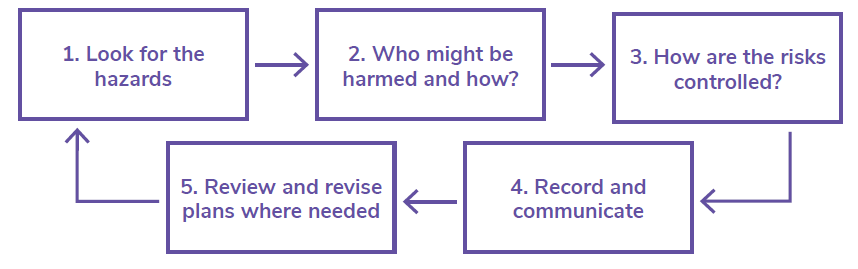
- Complete a risk assessment using the five steps approach and share it with those involved. Find an effective method to communicate the hazards and controls.
- Put an InTouch system in place so parents/carers know drop-off and collection arrangements and you have an effective emergency contact system. It’s OK to stop, pause or alter any activity you feel is too risky, whether led by you or others.
- Check equipment and venues are safe before use.
- Give clear instructions to young people and adults and encourage them to speak up if they spot a risk.
- Practise or explain emergency procedures, e.g. evacuation, first aid, or what to do if a young person goes missing.
- In your teams, a volunteer will be the leader-in-charge of overseeing the management of safety of specific meetings, events or activities. This includes oversight, registers, headcounts, sharing risk assessments, role allocation, and confirming that volunteers understand their duties and effectively communicate any controls.
Check - Stay alert
- Review risk assessments before and during activities, updating them if things change (e.g. weather, numbers or behaviour).
- Check if safety measures are actually working. Is everyone following the rules? Is supervision effective?
- Keep a record of any incidents, near misses or equipment problems, and review the activity afterwards.
Act – Learn and improve
- Report all incidents, injuries and near misses locally using the Purple Card process.
- Have a short review after each activity. Share and celebrate what went well. Note what could be improved and what you need to change next time.
- Update your risk assessments and safety practices ready for future activities.
- Share what you’ve learned with your Group or District so others can
benefit too. - Make safety a regular item at section planning meetings.
- Remember: safety and adventure go together – Scouts is not risk free,
but risks should always be managed well.
Safety check spotting
Use these hazard identifiers as a starting point as you carry out your risk
assessment and create your controls. Add any hazards specific to the
activity, your location, or the people involved.
For all activities
- Make sure adults understand and follow the Safeguarding Code of
Conduct for Adults (Yellow Card). - Identify your leader-in-charge.
- Have an agreed system in place for handing over young people between
parents, carers and volunteers. - Have a suitable supervision plan, including free-time and unstructured
activities. - Have a plan for what to do in an emergency. Tell everybody how it
works. - Put an InTouch process in place. Keep records updated including any
medical, health or dietary information. - Have a suitable first aid kit and trained first aider available.
Indoor and outdoor games
- Make sure activities are suitable for the age and ability of participants.
- Clearly explain rules and boundaries.
- Store tables, chairs and equipment safely.
- Check floors and open spaces are free from slips and trips.
Meetings outside your regular meeting place
- Plan and carry out headcounts and regular check-ins.
- Put a plan in place if a person gets separated or lost.
- Identify and manage natural hazards (e.g. water, roads, terrain).
- Check if you need an activity permit.
- Maintain adequate supervision and ratios.
Indoor or outdoor nights away
- Make sure a valid and appropriate Nights Away Permit holder is present
and responsible. - Identify fire exits and escape routes and keep them clear.
- Complete fire safety checks: test detectors, identify risks, and check
controls are in place including for carbon monoxide. - Check sleeping accommodation is safe and accessible and assess
outdoor terrain to make sure it’s suitable. - Set up cooking areas safely with fires and stoves that are stable,
supervised, and well-ventilated. - Carry out regular checks and inspections on supervision, behaviour and
any fixed, electrical or portal equipment that is in use.
Risk assessments: 5 key steps
Risk assessment is a cornerstone of safe Scouting. All activities, indoors or
outdoors, must be risk assessed.
Five key steps
For more information, templates and examples, visit our Risk Assessment guidance page