
Practice fire building with chocolate biscuits
You’ll need
- Chocolate finger biscuits
- Paper plates
Before you begin
- Use the safety checklist to help you plan and risk assess your activity. Additional help to carry out your risk assessment, including examples can be found here. Don’t forget to make sure all young people and adults involved in the activity know how to take part safely.
- Make sure you’ll have enough adult helpers. You may need some parents and carers to help if you’re short on helpers.
Setting up this activity
- Check for allergies, eating problems or dietary requirements and adjust the recipe as needed. This may include making sure there’s no cross-contamination during food preparation, serving and storage.
- Wash your hands and wipe down the surfaces you’ll use with disinfectant spray. Remember to follow good food hygiene and safety practices.
- Have a hand washing station and take extra hygiene precautions when handling food. Take a look at our guidance on food preparation.
- You may want to have printed copies of each fire for people to use.
Running this activity
- Gather everyone together and ask if anyone knows any types of fires you can build.
- Tell everyone you’ll be learning how to make different fires with chocolate fingers. You’ll be making the log cabin fire, star fire, lean-to fire, platform fire and teepee fire.
- Ask everyone to wash their hands and to get into pairs.
- Give out the paper plate and give each pair around 10 chocolate fingers.
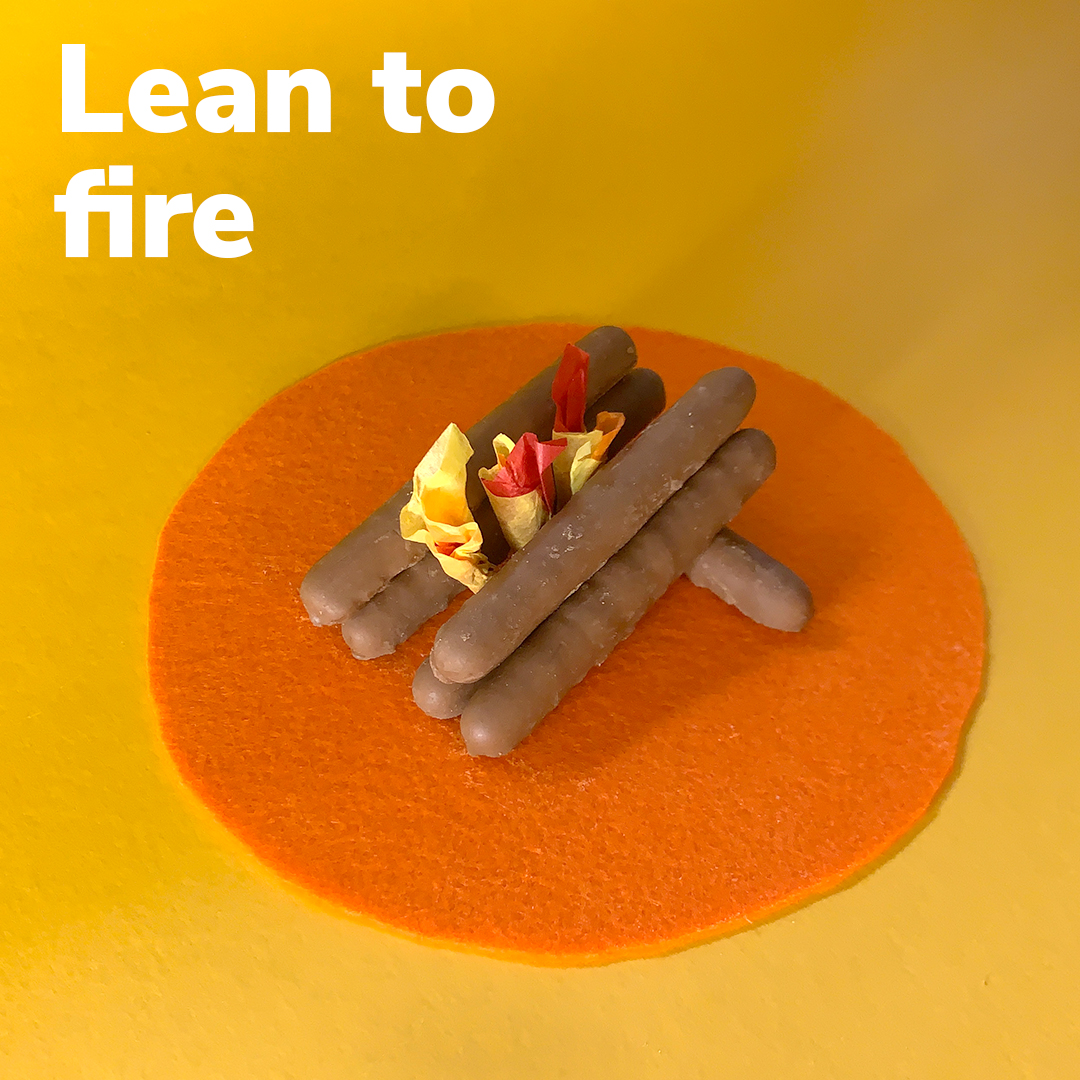
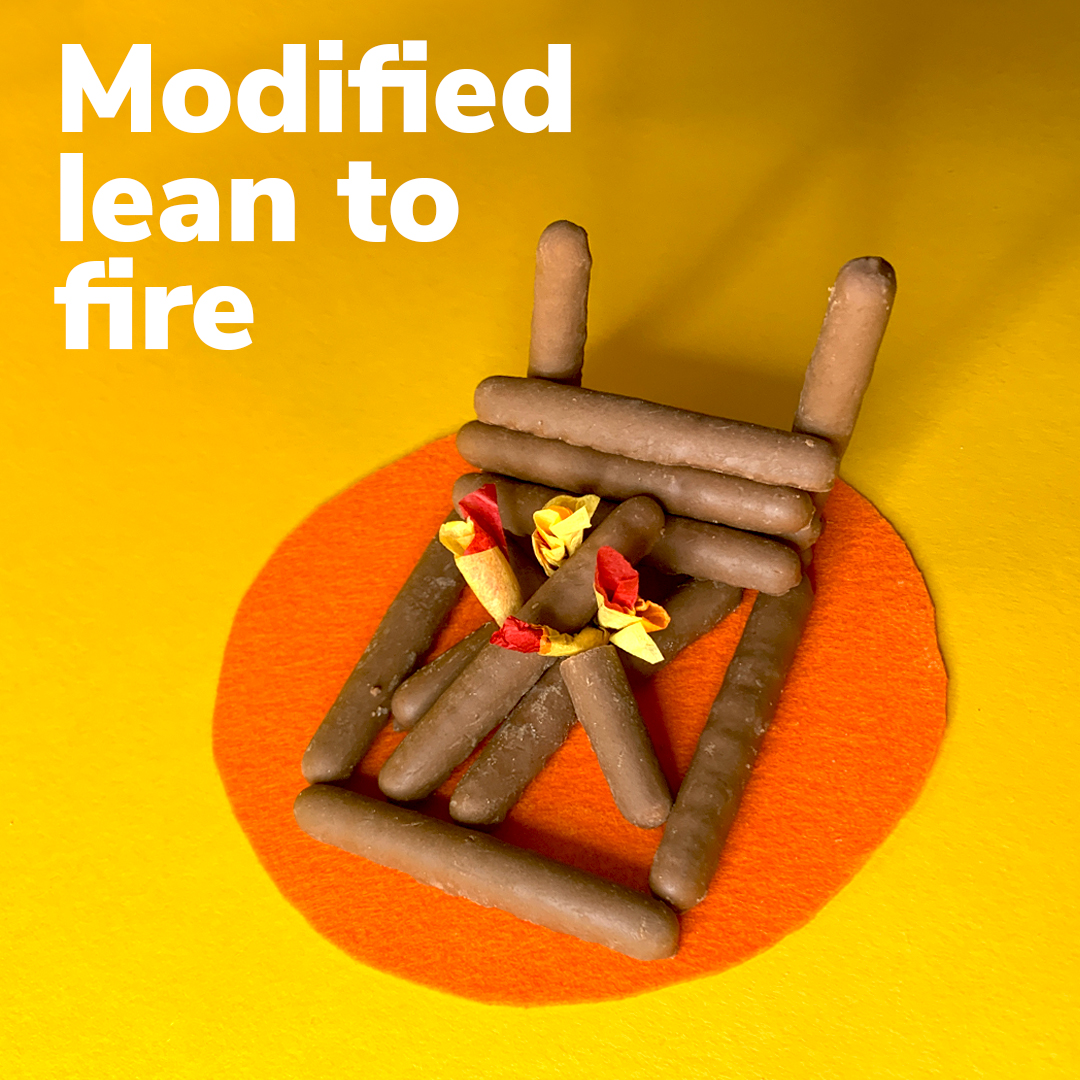
- Demonstrate how to build each fire using the chocolate fingers, then give people a chance to build it. You can use the photos on this page for guidance.
- Once each fire’s been built you could tell people about it:
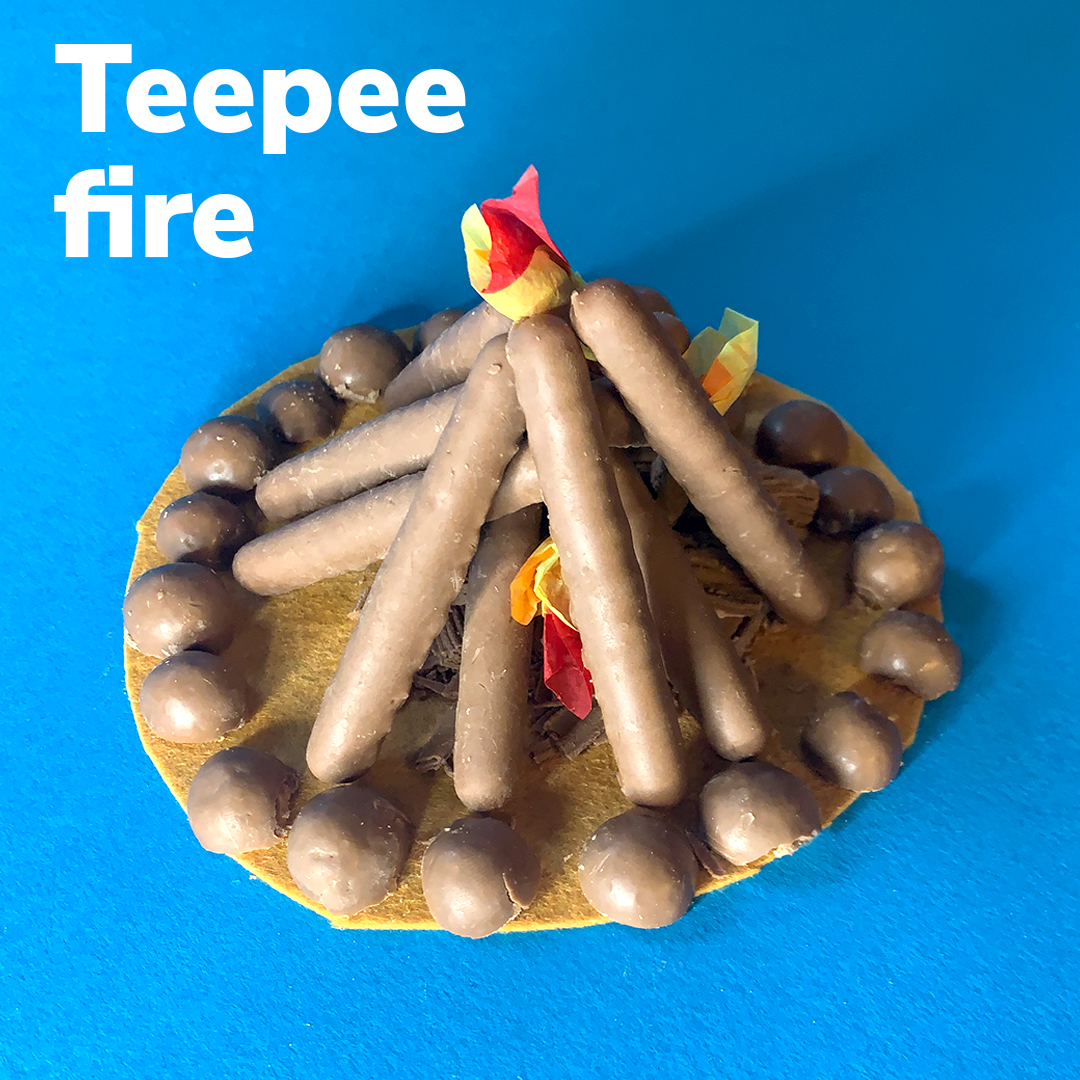
The teepee fire’s wide, circular base allows for lots of oxygen, so it gets hot. It’s also easy to add more wood. It's reliable and easy to start.
This fire burns lots of wood rapidly really quickly, so it’s best used as a quick warming fire or for small cooking tasks, such as boiling water.
To use this fire, you need to wait for the teepee to collapse, then put the pot of water on the coals, before adding small sticks around the pot to keep the fire going.
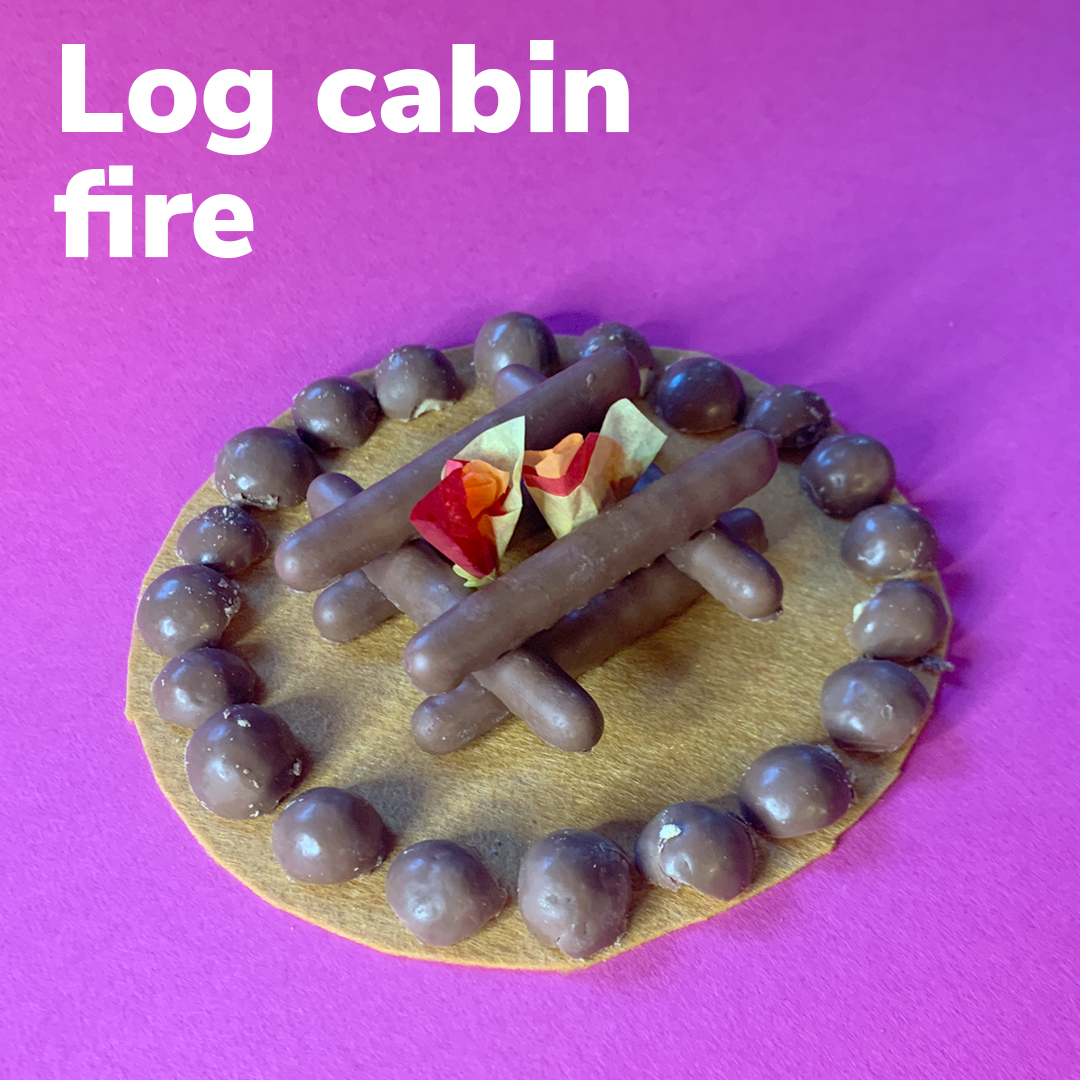
A Log Cabin fire lasts a long time and is easy to build. It has lots of air flow too.
It can get started quickly and easily, and, depending on how you build it, can keep burning for hours with no extra work.
You might build a small teepee fire at the bottom, in the middle to light this fire. It's easy to light and it creates a nice hot bed of coals, which are great for campfire cooking.
This fire's great for low supplies of wood.
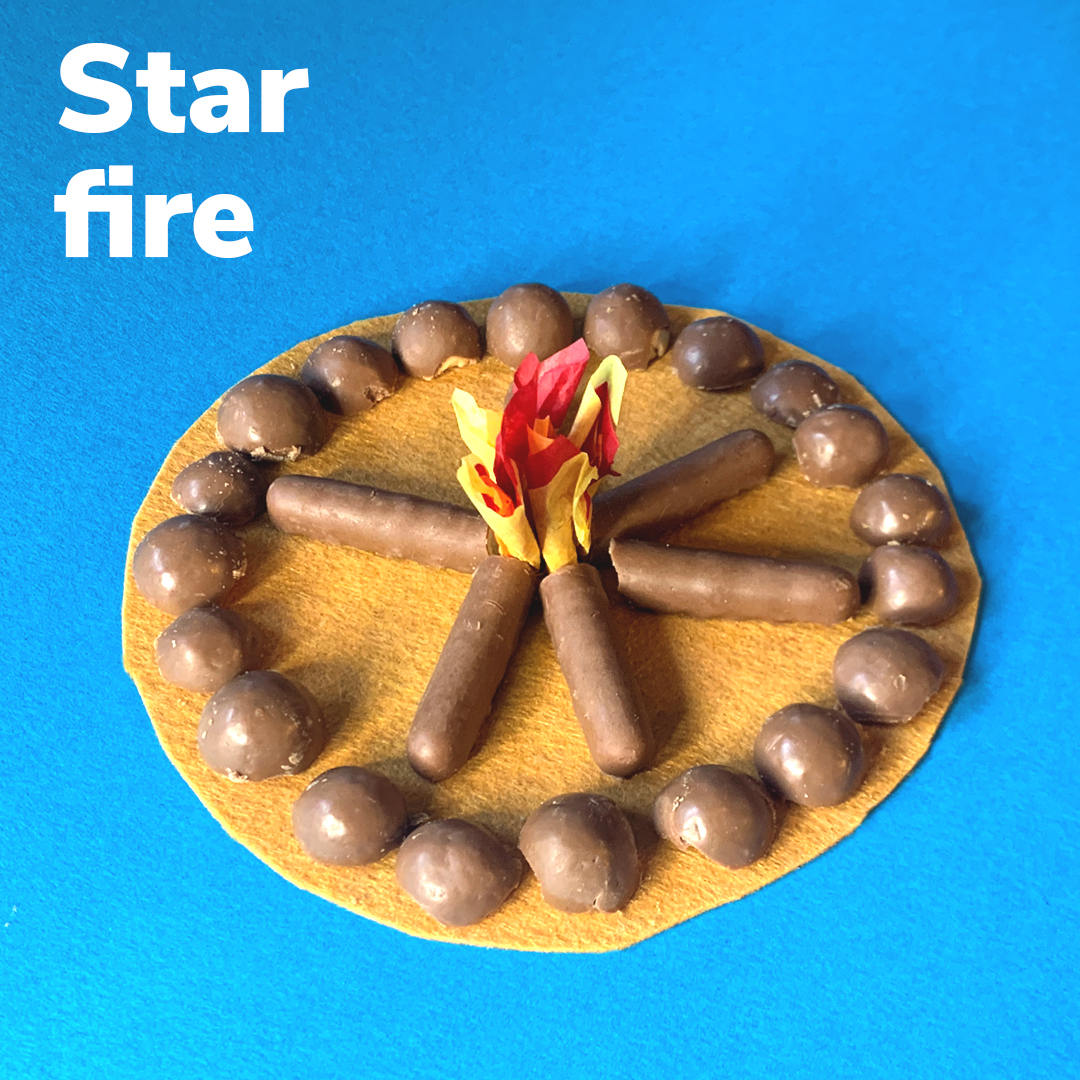
Unlike the other methods, which burn entire logs all at once, the star method works by burning the ends of a few logs bit by bit. The fire burns slowly. The logs can be any length, so they don't need to be cut.
It can be extinguished quickly by pulling the logs away from the centre, using heatproof tongs while wearing heatproof gloves.
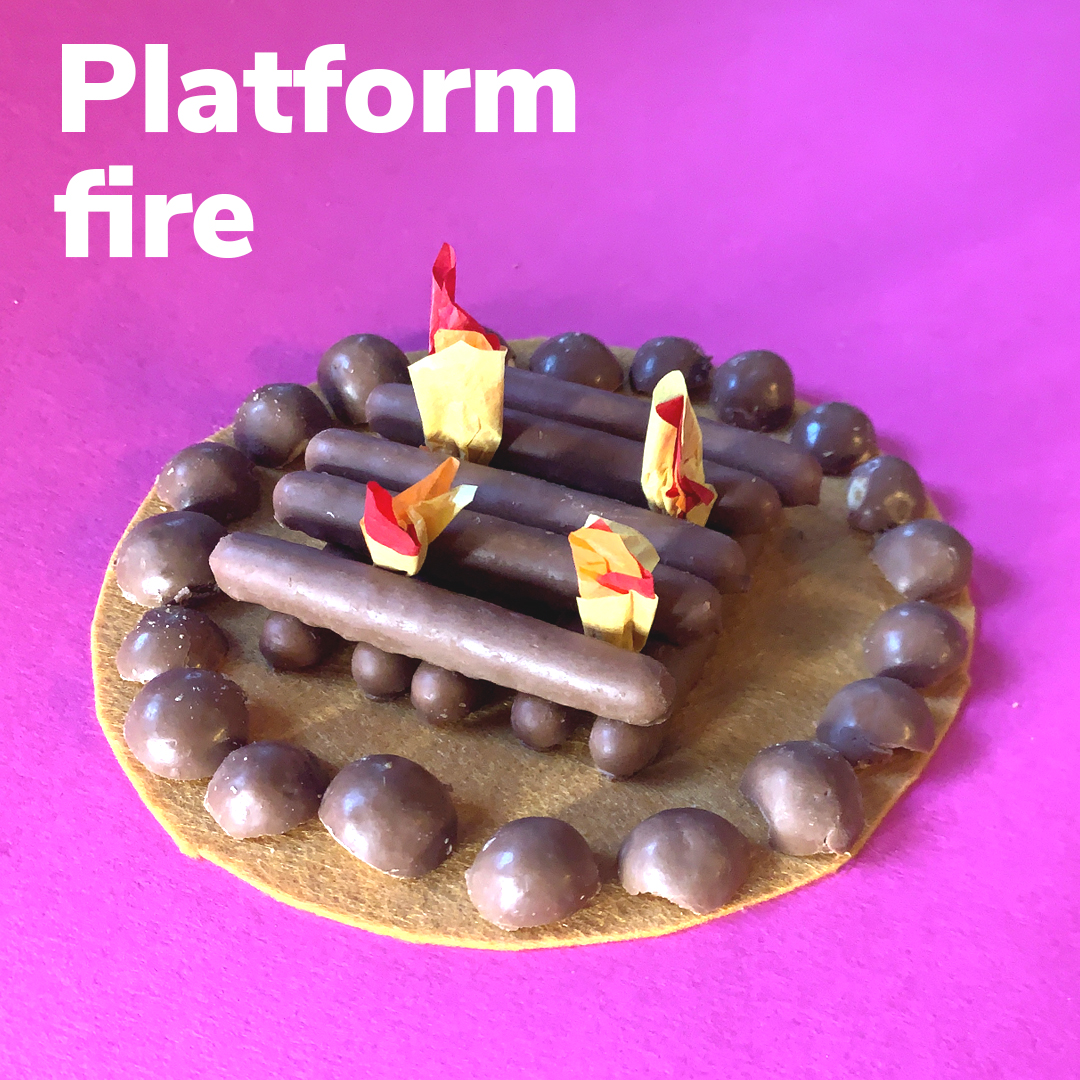
The platform fire’s main purpose is to cook food. The difference between this fire and the log cabin fire is that the logs are stacked closer together in the platform fire.
The fire's started on the top of the platform too, as opposed to underneath the logs in the log cabin fire.
By burning it down from the top, the fire creates a solid, flat ‘platform’ of coals, which you can place your pots and pans to cook.
The lean-to fire uses a solid log to act as both a wind break
The solid log is a strong support to build a fire on with a strong foundation.
It's most useful when you need cover to start a fire in the wind or rain.
Hosting a quiz
- When everyone’s finished building the fires and has learned a little about them, you could have a quick quiz and see if people can build the correct fire for the answer.
- Some questions could be:
- Q: Which fire’s best for rainy or windy weather? A: Lean-to
- Q: Which fire’s best for lasting a long time? A: Log cabin
- Q: Which fire’s good for when you don’t have lots of wood? A: Star
- Q: Which fire’s main purpose is for cooking food? A: Platform
- When you're finished, let people eat their chocolate fingers or have some extra ones that people can eat.
Teepee fire
Star fire
Log cabin fire
Platform fire
Lean to fire
Modified lean to fire
Reflection
This activity was a chance for everyone to find out about and develop the skills to build different types of fire.
Fires are can help us to cook, can keep us warm and are a great way for us to enjoy the outdoors. Can anyone remember a name of one of the types of fire? Can anyone remember any facts about them? What was it like trying to make them with chocolate fingers?
While building fires can be fun, we also need to stay safe. How do you stay safe around a campfire and add wood to it safely? An adult should use heatproof tongs when adding wood to the fire.
Remember, fires never to be left unattended and must always be supervised by a responsible adult.
Safety
All activities must be safely managed. You must complete a thorough risk assessment and take appropriate steps to reduce risk. Use the safety checklist to help you plan and risk assess your activity. Always get approval for the activity, and have suitable supervision and an InTouch process.
You must run your activities in line with the Safeguarding Code of Conduct for Adults (Yellow Card) and report any concerns to the UK HQ Safeguarding Team.
- Food
Remember to check for allergies, eating problems, fasting or dietary requirements and adjust the recipe as needed. Make sure you’ve suitable areas for storing and preparing food and avoid cross contamination of different foods. Take a look at our guidance on food safety and hygiene.
- To make this activity easier, you could give people multiple choice answers or true and false statements for the quiz.
- To make this activity harder, give people fewer facts about the fires.
- Make sure that all the materials are at a level that can be easily worked on by wheelchair users.
- Make sure you've checked everyone's dietary requirements and allergies then adapted the recipe as needed. This may include making sure there’s no cross-contamination during food preparation, serving and storage.
- If someone’s struggling with the construction section of this activity, people could work with a partner, with a young leader or in bigger groups, so they can help each other.
All Scout activities should be inclusive and accessible.