Craft a cotton poppy for VE 80
You’ll need
- Red circle of cotton material (15cm wide)
- Black button (2-3cm wide)
- Needle
- Safety pin
- Scissors
VE Day, which stands for Victory in Europe Day, was the day near the end of World War Two when fighting against Nazi Germany in Europe stopped. World War Two had begun in 1939. By 1945 it was clear Germany was going to lose the war.
On 8 May 1945, Prime Minister, Winston Churchill made an announcement on the radio at 3pm that the war in Europe had ended, after Germany's surrender the day before.
World War Two changed the lives of many millions of people all over the world. The UK was badly bombed in the Blitz. Children who lived in cities had been evacuated to the countryside for safety. Their education and lives had been completely disrupted.
VE Day was on Tuesday 8 May, 1945. It was an emotional day that millions of people had been waiting for. People were extremely happy that the fighting had stopped. There were big celebrations and street parties. Huge crowds gathered outside Buckingham Palace in London. People dressed in red, white and blue. They cheered as King George VI and his family came onto the balcony to greet everybody. Princess Elizabeth (who became Queen in 1952) and her sister were allowed to leave the palace that evening. They celebrated with crowds outside, although they had to do it secretly.
However, World War Two was not over yet. There was still fighting against Japan. The war with Japan ended in August 1945. This was called VJ Day - Victory in Japan Day.
(Source: BBC Bitesize)
Many people choose to wear a poppy in November for Remembrance Day to show respect for the people who died fighting in the First World War and the conflicts that followed it.
The red poppy is the most famous symbol used to commemorate those who sacrificed their lives in World War One and conflicts that followed.
Wearing a poppy was inspired by the fields of poppies that grew where many of the battles were fought.
The red poppy belongs to the Royal British Legion, which is a charity created by veterans of World War One. They say that the red poppy represents remembrance and hope.
(Source: BBC Bitesize)
Remembrance honours people who serve to defend our democratic freedom and way of life. We unite across faiths, cultures and backgrounds to remember the service and sacrifice of the Armed Forces community from the United Kingdom and the Commonwealth. We will remember them.
- We remember the sacrifice of the Armed Forces community from the United Kingdom and the Commonwealth.
- We pay tribute to the special contribution of families and of the emergency services.
- We acknowledge innocent civilians who’ve lost their lives in conflict and acts of terrorism.
Remembrance doesn’t glorify war and its symbol, the red poppy, is a sign of both Remembrance and hope for a peaceful future. Wearing a poppy isn’t compulsory but it’s greatly appreciated by those who it’s intended to support. When and how you choose to wear a poppy reflects your individual experiences and personal memories.
Remembrance unites people of all faiths, cultures and backgrounds, but it’s also deeply personal. It could mean wearing a poppy in November, joining with others in your community on a commemorative anniversary, or taking a moment on your own to pause and reflect. Everyone’s free to remember in their own way or to choose not to remember at all.
- Armistice Day is the 11 November. It marks the armistice agreement that brought an end to the fighting of the first world war.
- People pause at 11am on the 11 November to remember service and sacrifice past and present.
- The national service of Remembrance happens on the closest Sunday to 11 November, which is known as Remembrance Sunday. Each year people gather at the Cenotaph in London and other memorial sites.
- We call the whole period around these dates Remembrance. There are many ways to take part in Remembrance.
The Royal British Legion remembers the Service of those who work to protect us and our ways of life. Whether in the Armed Forces, Emergency or Civilian Services, past or present, we remember who has served, how they served and why it’s important that we continue to remember them.
Before you begin
- Use the safety checklist to help you plan and risk assess your activity. There's also more guidance to help you carry out your risk assessment, including examples.
- Make sure all young people and adults involved in the activity know how to take part safely.
- Make sure you’ll have enough adult helpers. You may need some parents and carers to help.
Running this activity
- Gather the group together and explain that you’ll be each making a cotton poppy.
- Everyone should have needle, thread and piece of material.
- Show their group how to complete each step of the instructions to make their poppy. You could also have printed copies for people to follow too.
- Once everyone’s finished their poppy, you could get back together as a group and talk about what poppies symbolise, as well as why lots of people wear them around Remembrance. We’ve added some information in the Reflection section below to help get you started.
How to make a cotton poppy
1.
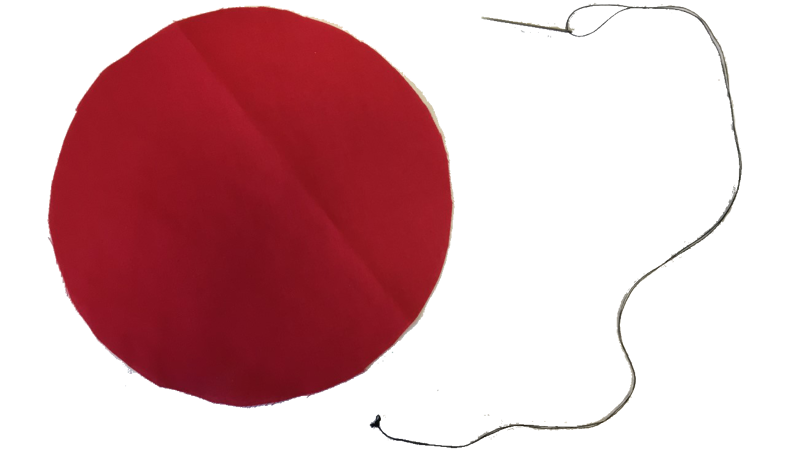
First, pull the thread through the eye of the needle to create a loop. Tie the two ends together with a double knot.
2.
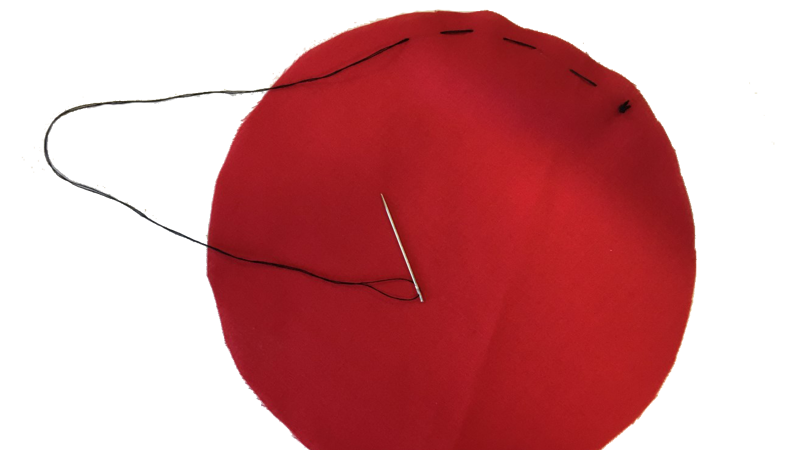
Take the circular piece of red material and sew a running stitch about half a centimetre in from the edge.
Continue stitching all the way around the circle, keeping the stitches evenly spaced. Don't make them too small.
3.
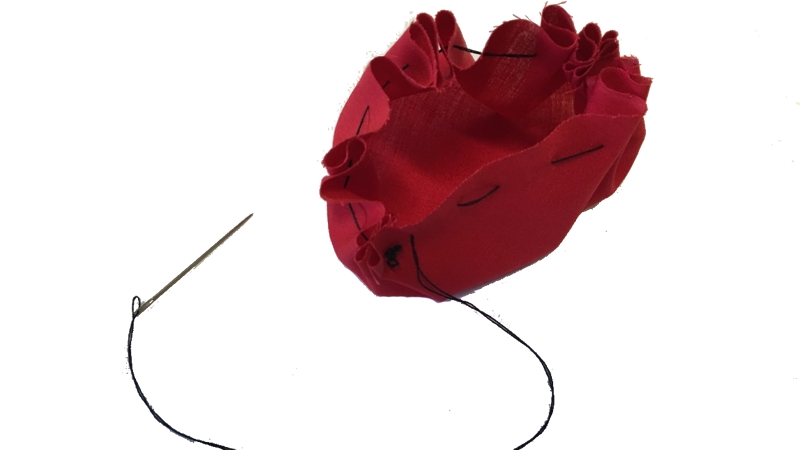
When you get back to the starting point, pull the needle through, so it's on the outside of the poppy. Start to pull the stitches together to close the circle by gently pulling on the thread.
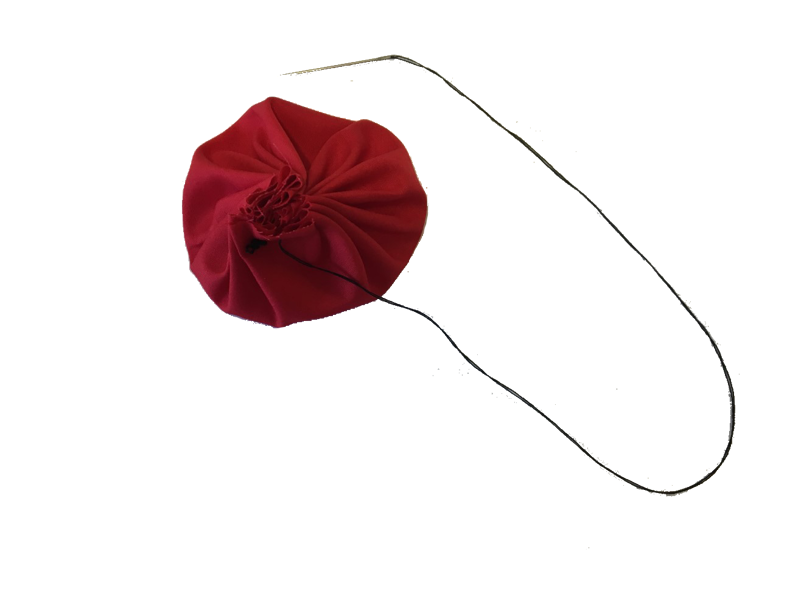
4.
Hold down the material in the middle of the circle with a thumb or finger. Pull out the edges slightly to form folds to make the petals of the poppy.
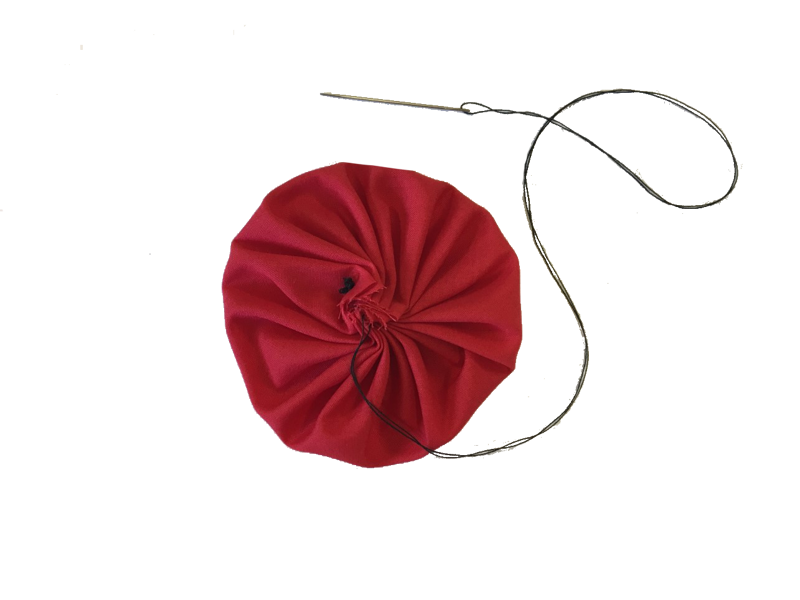
5.
Next, secure the gathered material in the middle with a couple of stitches.
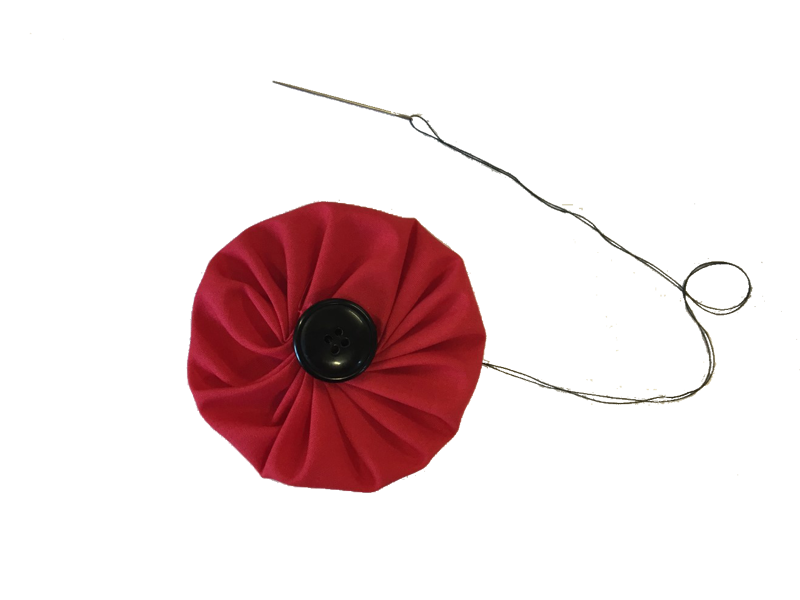
6.
Place a button on top of the gathered material and sew it in place.
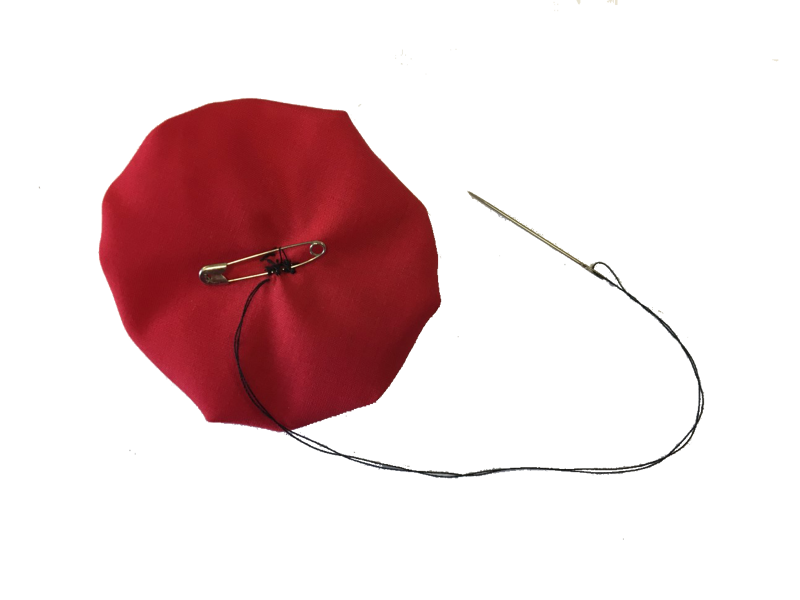
7.
To finish, secure the thread with a couple of small stitches at the back of the poppy. If you’re making your poppy to wear, sew a safety pin on the back.
8.
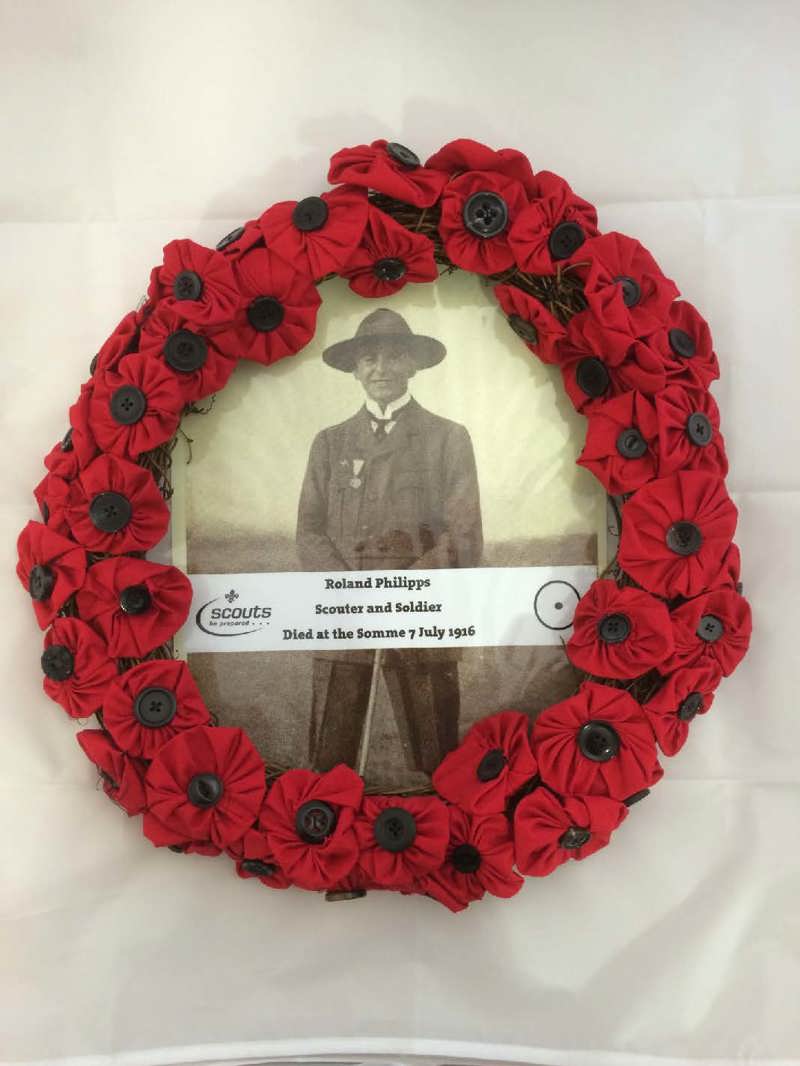
You could make lots of poppies as a group to be added to a wreath or other display, too.
Reflection
This activity gave everyone the chance to think a bit more about the poppy. Do people usually see lots of poppies around in November? Did anyone already know what they meant and what they symbolised? Do people think it’s helpful to have a shared symbol like a poppy for important things like Remembrance?
In this activity, everyone thought about Remembrance and how it links to their lives. What did people find out about Remembrance? How did it make them feel? How are people going to take part in Remembrance this year?
Safety
All activities must be safely managed. You must complete a thorough risk assessment and take appropriate steps to reduce risk. Use the safety checklist to help you plan and risk assess your activity. Always get approval for the activity, and have suitable supervision and an InTouch process.
You must run your activities in line with the Safeguarding Code of Conduct for Adults (Yellow Card) and report any concerns to the UK HQ Safeguarding Team.
- Scissors
Supervise young people appropriately when they’re using scissors. Store all sharp objects securely, out of the reach of young people.
- Sharp objects
Teach young people how to use sharp objects safely. Supervise them appropriately throughout. Store all sharp objects securely, out of the reach of young people.
- Why not work together to build all your poppies into a wreath or other display with your group? You could also make a few extra to share with family or friends.
- You could also try out A pebble to remember or Paracord poppies for some alternative activities.
- Let everyone know you’ll be doing some sewing before your meeting so that anyone who wants to can practice beforehand.
- If anyone struggles with fine motor skills, think about whether A pebble to remember would be a better choice for your group.
- People could use needle threaders or bigger needles and slightly thicker fabric if this would make the activity work for them.
All Scout activities should be inclusive and accessible.



Why not check out the information on our heritage web pages to find out more about Scouts in the first world war? There are online exhibitions and other learning resources.
If you want to explore Remembrance further and create your own virtual Remembrance event, have a look at A Remembrance reflection.