Expedition
Expedition
For your Expedition section, you will need to plan, train for and complete an unaccompanied, self-reliant expedition with an agreed team goal (project).
Training
The training you need to complete is outlined in the Expedition Training Framework and the DofE also have some ideas of training you can do at home to help prepare yourself. The DofE team has made a useful Expedition Training Pack.
Practice expeditions
At Silver and Gold level, you need to complete a practice expedition of at least 2 days and 2 nights in a similar environment and by the same mode of travel as your planned qualifying expedition. At Bronze, a practice expedition is not a requirement, but you need to show you're appropriately training to be able to complete the expedition.
Qualifying expedition
Your expedition must be completed by your own physical efforts with minimal external intervention and without motorised assistance. Expeditions can take place in urban environments, rural countryside, wild country or restricted spaces depending on the needs of the group.
Each level has a set number of hours of planned activity per day of which at least half must be active:
- Bronze – 2 days and 1 night, 6 hours planned activity per day
- Silver – 3 days and 2 nights, 7 hours of planned activity per day
- Gold – 4 days and 3 nights, 8 hours of planned activity per day
You must choose a non-motorised mode of travel for your expedition. That usually means canoeing, cycling, horse riding, rowing, sailing, walking or wheelchairs.
As a part of your expedition, you'll need to work towards a team goal. There are some ideas under each mode of travel accordion.
Please look at the expedition requirements for full information on what needs to be completed. The expedition guide gives useful information on running expeditions.
If you have any queries, please speak with your Leader or County DofE Adviser.
Modes of travel
- Exploring teamwork by nominating a different leader each day.
- Studying insect life on the South Downs.
- Planning a route around three of the places that inspired Wordsworth’s poems in the Lake District.
- Considering the impact of tourism on the flora and fauna of the French Alps.
- Creating a photographic guide to the Countryside Code round the Mourne Mountains for other DofE participants.
- Investigating features of the Thames using Thames cycle path.
- Using the cycle system in the Netherlands to undertake a research project on the provisions and quality of cycle paths compared to Britain.
- Following part of the Gerald of Wales route of 1188 through Pembrokeshire.
- On expedition, using simple mapping techniques to produce your own map of a local estuary and compare it with a real map when you return.
- Planning a Bronze sailing expedition on Lake Ullswater in the Lake District.
- Exploring the Norfolk Broads using sailing dinghies.
- Planning a cross channel journey in a yacht.
- Rowing along the Danube in Germany, booking camp sites in advance.
- Recording the wildlife found on the Strangford Lough canoe trail.
- Taking a series of photos to come up with a guide to a section of London canal systems.
- Making a study of the locks and lochs on the Caledonian Canal.
- Carrying out a wilderness trip in Canada utilising the canoe trails used by the original settlers.
- Choosing several points along a river and measure speed of flow, width and depth and comparing the differences along their route, trying to explain why this may be.
- Following a disused railway track noting the current use of previous railway buildings.
- Preparing a users’ guide of a country park or National Trust estate, explaining how it can be used, eg fishing, picnicking, conservation.
- Planning and doing a challenging route in the Peak District, making a short video diary.
- Producing an illustrated guide to a stretch of canal. Research the history and then travel along the tow path using the expedition to gather photographs and sketches to illustrate the guide.
- Planning a route in Cropton Forest to take a series of landscape photographs to use in a calendar.
- Planning an expedition on horseback in the countryside including identifying suitable farm camp sites and bridleways.
- Planning an expedition with sea views in Devon, taking photos along the way so that you can paint a picture of your favourite scene when you return.
- Exploring accessibility and bridle paths in the Brecon Beacons.
- Going on an expedition through woodland, noting the different types and ages of trees you see.
- Going on a horse riding expedition and writing a poem on your return to describe your experiences.
Checklist
- Expedition meets the expedition requirements.
- All expeditions need to be registered with the County/Area DofE Lead.
- All expeditions are supervised by a qualified person and assessed by an accredited assessor.
- Training and expeditions have been added to eDofE - expedition set up is a useful tool to do this.
- An accredited assessor, registered with Scouts, is identified and completes an assessor's report for the participant via the DofE website or using the card in the DofE welcome pack.
Expedition supervisors
The expedition supervisor must be present on all expeditions. They're responsible for the safety, health and welfare of the group whilst on expedition and work in partnership with the Assessor to monitor the group throughout their expedition.
The supervisor would need to hold a relevant Nights Away permit and follow the relevant activity guidance for the mode of travel. They also need to ensure that Scouts rules are followed, including any additional adventurous activity permits required, Nights Away notification and Lead Volunteer approval.
Expedition Assessors
Expedition assessors need to be accredited by the DofE and registered to assess with The Scouts. Read our guidance for Expedition assessors to learn more.
The assessor must be 18+ and not related to the participant. They'll write an assessor's report which can be submitted via the DofE website or using the card in the welcome pack.
Support
Here are some resources to support you with this section:
The DofE have lots of opportunities for each section on their website
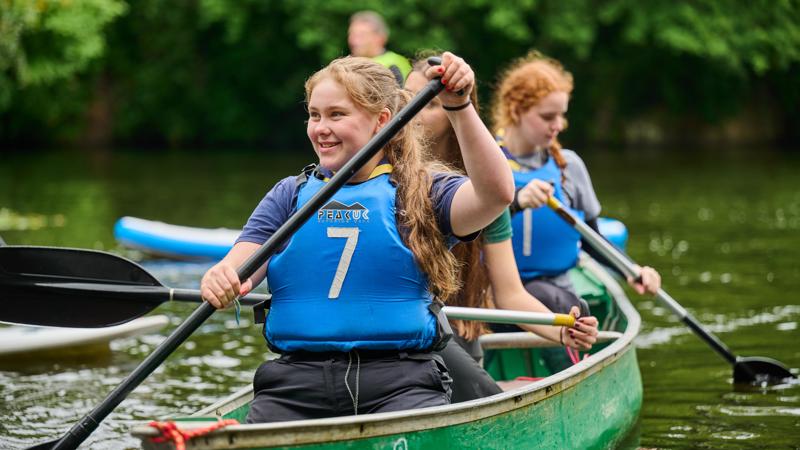
The DofE have ideas for activities for all sections on their website.
Check out the details of available funds and grants from Scouts.