Childhood health and why it’s so important Squirrels reaches new areas
A new report from the NHS shows the likelihood of being obese is increased if young people live in a more deprived area. Andrew Bollington, the Early Years Programme Sponsor at Scouts, and Carl Hankinson, our UK Chief Commissioner, look at the statistics and consider whether Scouts could be part of the solution
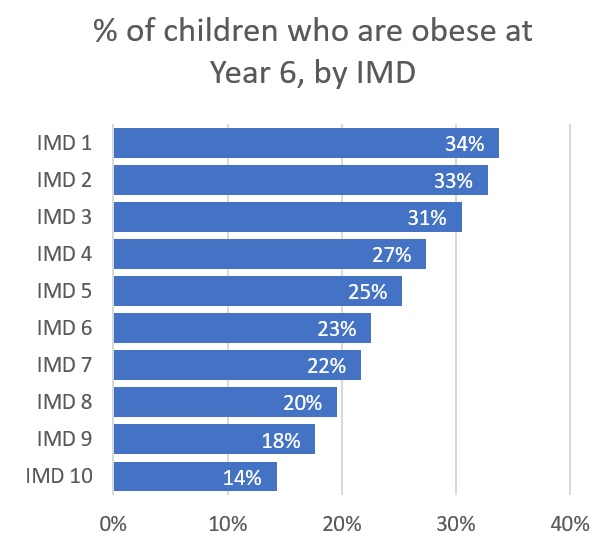
The NHS has reported that children are more than twice as likely to be obese by Year 6 of school if they live in more deprived areas. The government classifies areas of deprivation using the Index of Multiple Deprivation scale (better known as IMDs), which rank communities from most deprived (IMD 1) to least deprived (IMD 10).
The scale reflects income, employment, education, health, crime, housing and living environment data. The 10% most deprived communities are categorised as IMD 1, the next 10% as IMD 2, right the way through to the least deprived 10% of communities as IMD 10.
The children who are more likely to be obese are in IMD 1–3.
Obviously, there are many factors that could play a part in this. For example, difficulty in accessing extracurricular physical activities like swimming classes or dancing, the extra expense of buying healthy ingredients like fresh fruit and vegetables, and busy parents who do shift work finding it difficult to prepare meals without processed foods.
Unfortunately, childhood obesity increases the risk of lots of serious medical problems, including type 2 diabetes, high blood pressure, liver disease, bone and joint problems, asthma, sleep disorders and skin infections. These can be diseases with lifelong consequences.
That’s one of the reasons why it’s so important for us to reach underrepresented communities with Scouts.
One of the outcomes we aim for is to help young people lead healthier, more active lifestyles. We know that we do this – the Scout Experience Survey 2019 found that young people in Scouts spend on average 1.1 more days a week being physically active than young people not in Scouts.
There’s more good news. Squirrels, our new section for 4–6 year olds, is proving to be particularly successful in reaching underrepresented communities. As of November, 29% of our 375 new Squirrel Dreys are in IMDs 1–3 and 48% are in IMDs 1–5.
This means that Squirrels is helping Scouts to become more representative of UK society, and is helping children who need an active programme the most – especially through new activity badges like Explore Outdoors and Feel Good (which introduce healthy lifestyle ideas).
This isn’t an accident. Squirrels was piloted and evaluated exclusively in underrepresented communities.
Through the cohort model of starting Squirrels – where members are supported by a coach and peers running Squirrels, there’s support in place to help Squirrels start in underrepresented communities. There are also start-up grants.
However, we need your continued help to make sure that the roll-out of Squirrels prioritises the communities where Scouting has been historically underrepresented. This won’t happen by accident – and you can help to make the difference.
Please, as you make your plans for rolling out Squirrels in 2022 and beyond, think first about the children and communities who need it the most.