Votes for 16
Democracy and Your Voice
Exploring democracy is not about promoting political parties, but about understanding how decisions are made and how they affect everyday life. From local services and transport to schools, opportunities, and even interests such as sport, gaming, and hobbies, democratic decisions shape the world around us.
With the UK Government confirming its intention to extend voting rights to 16- and 17-year-olds through a forthcoming Elections Bill, many young people will be eligible to vote while still in school or college. Research by the Electoral Commission (2025) shows that 72% of young people aged 11–25 want more education about politics and democratic processes.
This makes it increasingly important that schools, youth groups, and community organisations create opportunities for young people to understand democratic participation, political systems, and informed decision-making so they are prepared to use their voice confidently when they reach voting age.
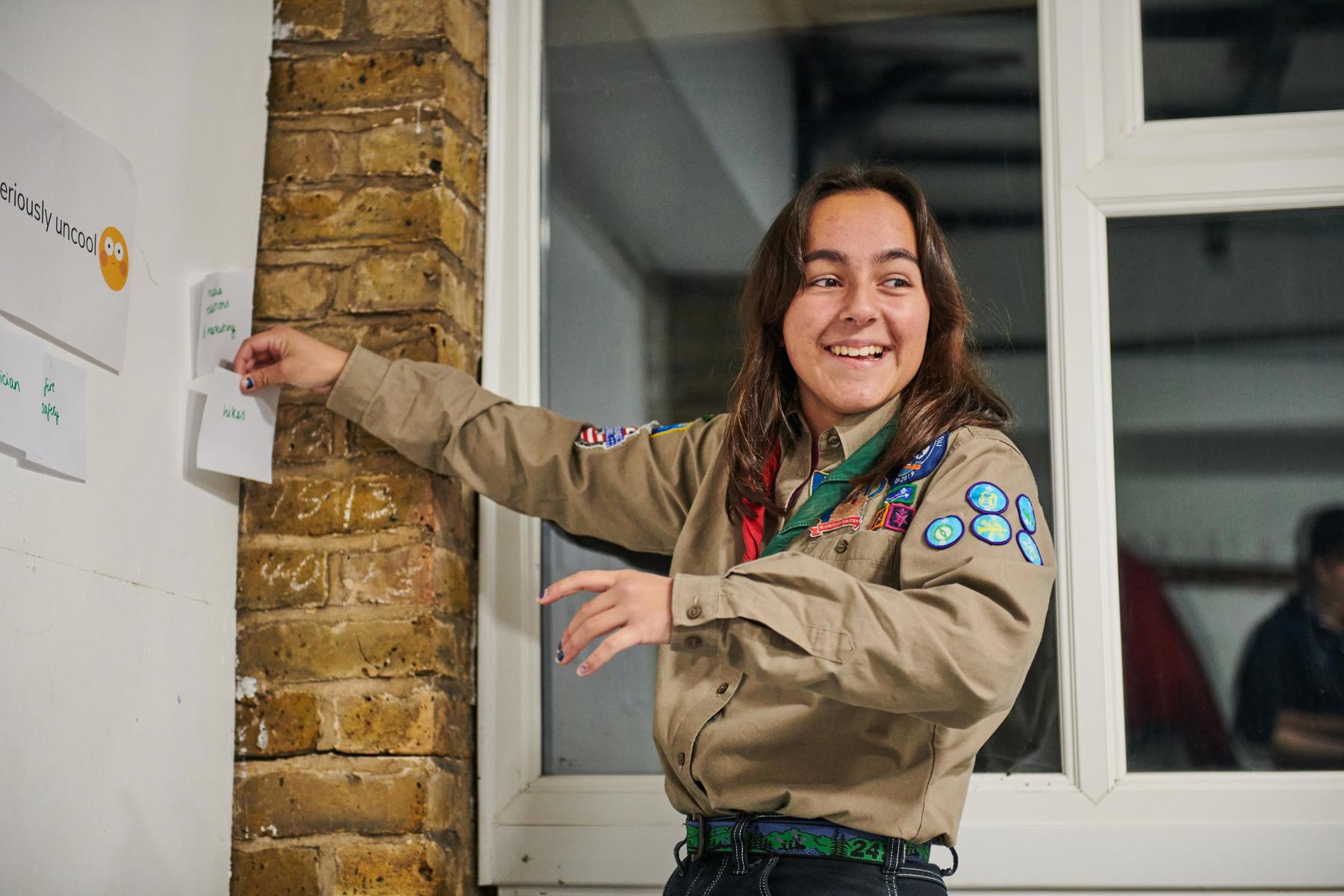
Exploring Voting at 16
To build on this understanding, the Explorer Democracy Activity Badge can be adapted to help young people explore what voting at 16 means in practice. Explorers complete three requirements, choosing from activities that help them understand how democracy works and how they can actively take part in shaping decisions that affect them.
Explorer Democracy Activity Badge: Voting at 16 Adaptation
Complete three requirements. You could choose from:
- Research how a general or local election works, including how you register to vote, how voting takes place, and how results are counted and decided.
- Explore how Parliament is structured, including the House of Commons and House of Lords, and how laws are made.
- Learn how local councils make decisions and how these affect services in your area (for example transport, education, housing).
- Visit the UK Parliament or a devolved parliament, or take part in an education session exploring how it works.
- Visit a local council meeting or speak to a councillor about how decisions are made in your area.
- Attend a Q&A session with an MP, councillor, or elected representative, or observe a live debate, committee session, or parliamentary discussion.
- Write a letter or email to an MP or councillor about an issue that matters to young people in your community.
- Gather views from other young people on local or national issues and share them with a decision-maker or elected representative.
- Speak to local representatives about how decisions are made and how young people can have greater influence in democracy.
- Investigate why certain groups are less likely to vote and explore barriers such as awareness, confidence, or access to information.
- Design a solution that improves accessibility or understanding of voting for first-time or young voters.
- Create a campaign, resource, or activity that explains why voting matters and how it connects to everyday life.
- Develop a resource explaining how to register and vote, and why participation matters.
- Create a guide showing how decisions are made locally and nationally and how they affect young people’s lives.
- Produce a video, podcast, presentation, or interactive resource explaining Parliament, including the House of Commons and House of Lords.
Activity ideas
Explore how government decisions are made and the issues that matter to you.
Make a decisionExplore voting barriers for different groups of people.
Play the Paper Bin GameExplore your views and compare them with different approaches to common issues.
Where do you stand?Explore how government spending decisions are made.
Play show me the moneyDiscover how power has changed over time and how your vote matters today.
Learn about the Senedd and UK Parliament and how decisions are made.
Posters of power: Senedd & ParliamentDelivery Guidance: Scouts and Politics
Purpose of the activity
When delivering this activity, the focus should be on helping young people understand how democracy works and how decisions are made, rather than discussing or promoting any political parties or personal political views. The aim is to create a safe, balanced space where young people feel confident exploring ideas, asking questions, and forming their own opinions.
Role of Adult Volunteers
Adult volunteers should act as facilitators rather than instructors, supporting young people to lead discussions and explore the issues that matter to them in their everyday lives, such as education, transport, the environment, local facilities, and opportunities in their communities. Conversations should be guided in a way that helps young people understand different perspectives and the role of democratic processes in shaping decisions at both local and national level.
Creating a safe and balanced environment
It is important that discussions are kept balanced, inclusive, and respectful, ensuring a safe environment where a range of views can be shared. Young people should be supported to listen to others, consider different viewpoints, and develop their own informed understanding without influence or bias.
Signposting information
Where helpful, adult volunteers can support young people to find reliable, age-appropriate information to explore topics further and build their confidence in engaging with democratic processes, but should avoid directing opinions or steering discussions towards particular viewpoints.
Understanding UK democracy in context
It is also important to recognise that democracy and decision-making can look different across the UK. Scotland, Wales, Northern Ireland, and England each have devolved systems of government, with certain responsibilities held locally and others at UK level. Local areas may also experience different priorities and decision-making structures, so young people should be encouraged to explore how decisions are made in their own community and how this connects to wider national systems.
Useful Links:
Scout guidance
- Community impact and political campaigning at Scouts
- Work with elected decision makers
- Political activities, citizenship and participation [POR guidance]
UK Parliament and democracy education
- Book a tour of the Senedd
- Book a tour of the UK Parliament
- Learn more about the Senedd
- Learn more about UK Parliament
The Electoral Commission
The Electoral Commission has lots of resources to support this award. You can learn more about the Electoral Commission on their website.
Useful Links:
Local democracy
- Find your local elections team
- Find your local councillors, MSs and MP
UK Parliament Week (23-29 November 2026)
Each year, UK Parliament Week gives young people the opportunity to learn what Parliament is, what it does, and how they can influence change. Groups can take part using free resources and activity packs.