Building partnerships with parents and carers
Tips for talking about including disabled young people.
At Scouts, young people are at the centre of decisions about their support. Talking with young people alongside their parents and carers is key to supporting disabled young people. Use our tips for conversations to help you make reasonable adjustments and create Individual Support Plans for young people.
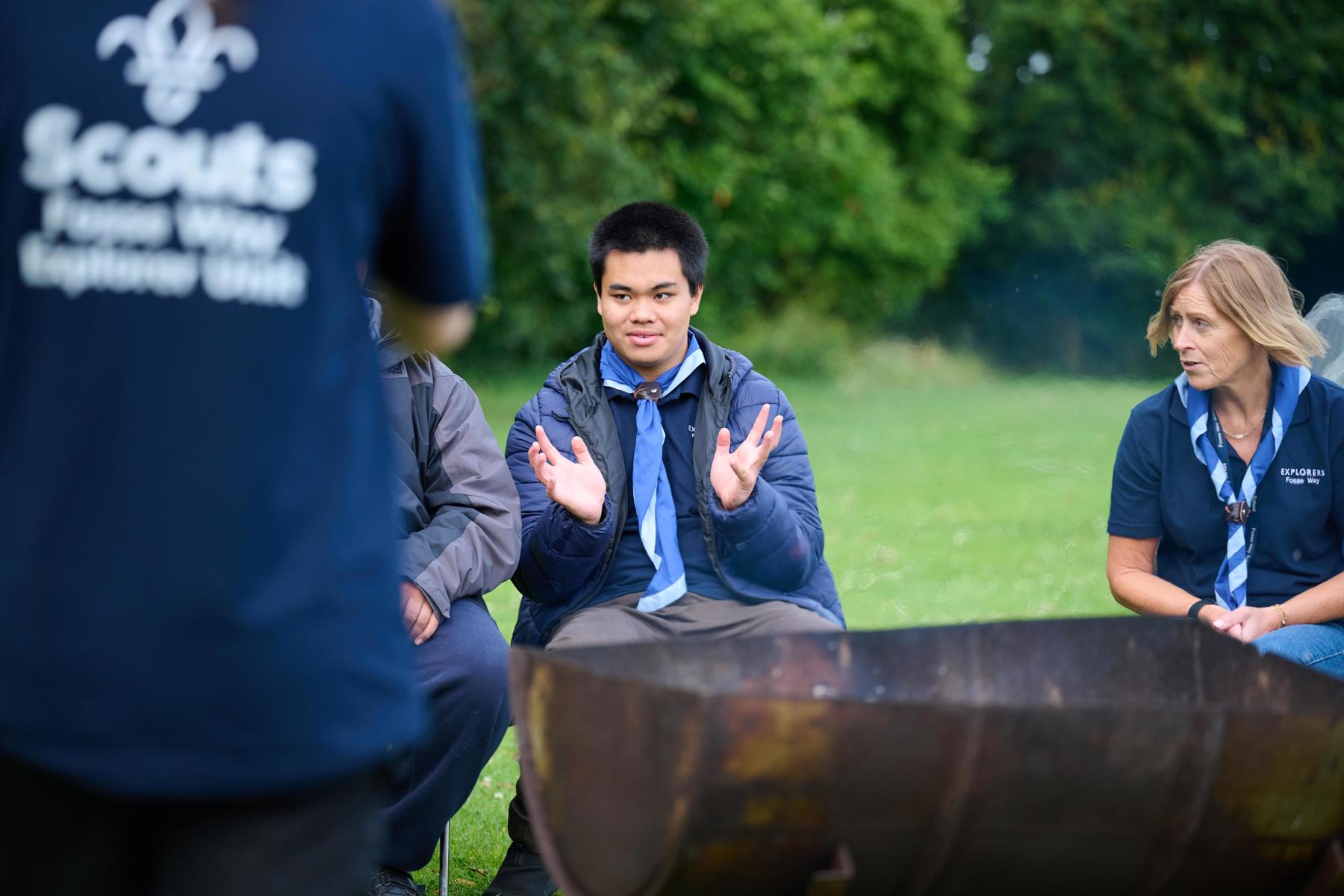
Tips for conversations
Before the conversation
- Agree a time and quiet place to talk with the young person, if appropriate, and their parent or carer.
- Learn about the young person’s disability, but don’t make assumptions. Let the young person, their parent or carer guide the language.
During the conversation
- Help everyone feel relaxed by explaining why you’re having the conversation.
- Let them know Scouts is run by volunteers.
- Explain what Scouts is like and what to expect.
- Describe Section Nights, badges, activities like Nights Away and events.
- Tell them Scouts can be flexible to meet young people’s needs.
- Find out what the young person finds difficult and how you can help.
- Ask how the young person is supported at home or school.
- Be honest about what volunteers can do.
- Let the family lead on how best to support the young person.
- Say how the information will be stored and shared. Ask for their consent.
- What would you like (young person's name) to get out of Scouts?
- Do you or (young person's name) know anyone in the Group?
- How can we best help (young person's name) join in?
Check out our conversation starters and tips for more ideas.
At the end of the conversation
- Swap contact details and agree how to keep in touch
- Arrange a visit to the Section Night or meeting place. Or, invite the parent or carer to the first Section Night, or to join the Volunteer Team.
- Be honest about any limits, like resources or capacity, and suggest alternative Groups if needed.
- Remind them about Scouts' commitment to keeping everyone safe.
- Share meeting notes so everyone knows what was agreed.
- Plan to review and update adjustments regularly.
What if we don't agree on support?
Sometimes people don't agree on what support is needed. If this happens:
- Speak to your Volunteer Line Manager or the Support Centre.
- If it's a safeguarding issue, follow the Yellow Card.
Tips for communicating with young people
-
Learn how the young person communicates and add this to their support plan.
-
Communicate in their way, like using words, signs or pointing.
-
Ask for advice from any professionals supporting them.
-
Clearly explain what’s happening.
Conversation starters and question tips
Look at our conversation tips to help guide the conversation.
Download our conversation starters and question tips
Discover how to create individual support plans.