How Scouts helped feed the UK during the Second World War
When the Second World War began, Scouts had lots of skills that could help their country, especially when food shortages and rationing began.
In the late 1930s, when war in Europe seemed increasingly likely, the country realised there’d be food shortages.
As the government worked with civilian organisations to help feed the country, Scouts were there to help.
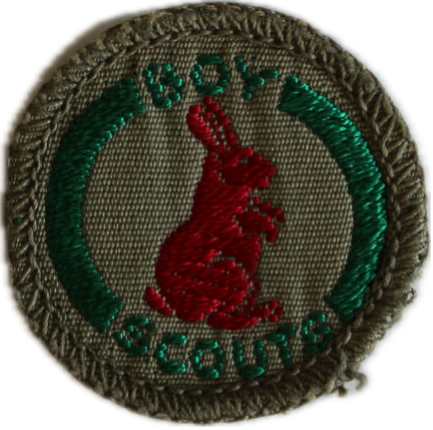
Several badges gave Scouts the skills to help, including Dairy Farmer, Poultry Keeper, Gardener and Farmer. In 1938, the Rabbit Farmer badge was introduced to help families supplement their meat ration. The badge was discontinued in 1946.
When war broke out, campaigns were launched to help the nation make the best of home-grown food. Cubs and Scouts gathered berries from hedgerows for jams and syrups in the ‘Fruit for fitness’ campaign, while others camped at fruit farms to help bring in the harvest.
Digging for victory
‘Dig for Victory’ was one of the most famous wartime campaigns, encouraging people to grow their own produce. By 1943, the number of allotments in the UK had doubled and it was seen as ‘doing your bit’ for the war effort.
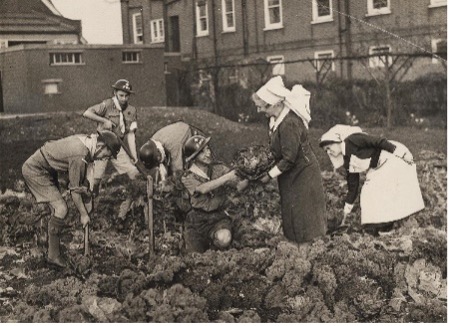
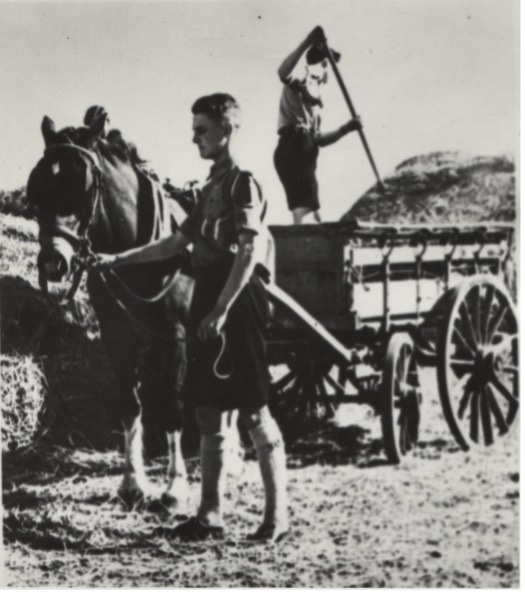
Many Scouts Groups helped on farms, holding working camps instead of normal summer camps.

Although the work was tiring, the camp was a success, and the Scouts returned feeling that they'd been able to contribute in a small way to the national war effort, and the boys' health benefitted by the outdoor work. Even if no actual Scouting work was done, we were carrying out our Scout Law in a better way than by merely enjoying ourselves.
A Scout Group reflects after helping on a farm
Cooking on coupons
When food rationing was introduced, the nation had to plan their meals by considering what they could buy with food ration coupons.
In August 1940, 5th Durham Scout Group decided to volunteer on a local farm for a week. They later wrote to The Scouter magazine explaining how they coped with cooking on rations.
The bacon ration necessitated fewer bacon breakfasts than usual, and we were only able to have eggs once, but we made up our breakfast menus with fried tinned tomatoes, sausages and kippers. For dinners, we had boiled fish once, rabbits once and otherwise meat as usual. For our ‘plum duffs’, we used treacle to replace some of the sugar and dates in place of currants also saved sugar. For tea, we had bread and jam, and also something else such as sardines, cheese, or jelly, and for supper, cocoa and biscuits or soup or rabbit stew.
5th Durham Scout Group, The Scouter, 1940
…every Scout will have to take his own sugar to camp. There need be no difficulty about butter because margarine is just as good and it is almost impossible to taste any difference. There are many parts of an animal which are not in the meat ration, and your butcher will tell you which they are. In any case you have fish, eggs, rice, cheese and various other foods which are quite as nutritious as meat...
The Scouter magazine, April 1940
Helping others
True to their promise to help other people, Scouts brought their cooking skills to rest centres, canteens and refreshment vans. These places supported those who’d lost their homes, as well as members of the Armed Forces.
They worked with civilian organisations during the Blitz such as the ARP, fire brigade and ambulance service, who greatly appreciated a cup of tea at the end of a hard shift.
Cubs and Scouts also helped sort boxes of comforts for members of the armed forces who were on active service. These boxes included treats, such as chocolate, which was rationed during the war.
Explore Scout Store's Remembrance range
This year, our Remembrance badge recollects the efforts of the wartime Scouts who put their promise into action and helped in so many ways. We can only hope they also enjoyed their chocolate ration as a well-earned reward.
Get your Remembrance badge from Scout Store