Why mental resilience gets you further
Preet Chandi MBE, also known to her fans as @PolarPreet, holds four Guinness World Records for solo expeditions in the Antarctic. As she prepares for a new mission to cross 500 miles of sea ice and reach the North Pole, we caught up with her to find out what draws her to the cold and why mental resilience counts for so much.
What’s the attraction of the poles for you?
I didn’t know anything about them, so that’s the attraction. People always ask me: ‘Aren't you interested in doing things in the heat?’ But that's all I used to do when I was in the Army. I’d spent six months in Kenya, six months in South Sudan, and a short stint in Nepal. I'd only ever done stuff in the heat. I was looking for a different challenge.
My old boss just mentioned the South Pole. He's like, ‘What about doing something in Antarctica?’ That's the appeal, you know, to go and do something you don't know anything about.
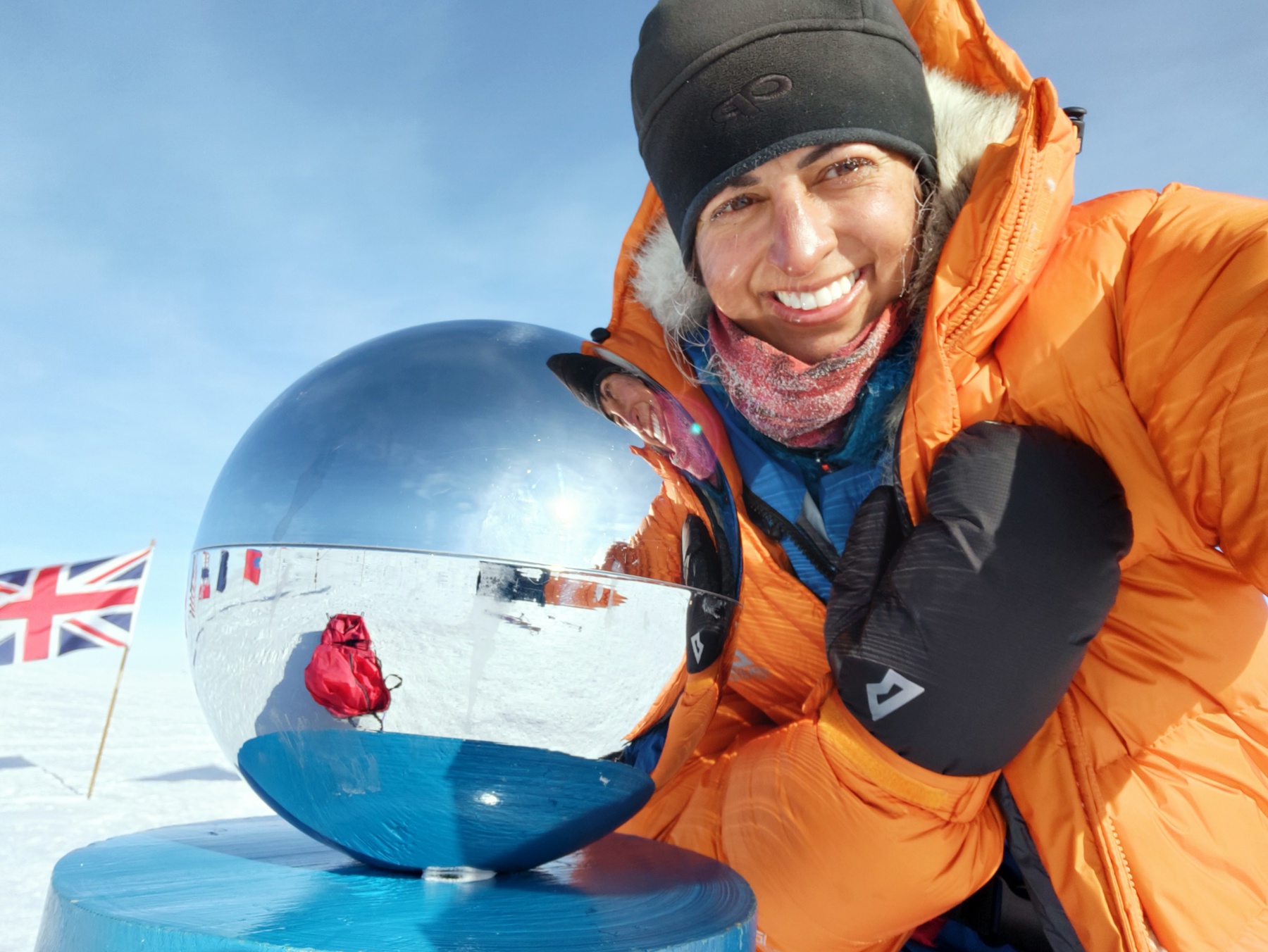
How did you get your start in the outdoors?
I wasn't in any adventure groups as a kid. We didn't do that kind of thing. My outdoor skills came from the military, which joined when I was 19. It was about doing something that was so different from what I knew.
Your expeditions are usually solo and unsupported. Wouldn't the adventures be easier with some companions?
I’d done plenty of team-based exercises in the military, so I wanted to challenge myself by going solo. It’s tough not having someone else to rely on, but that’s part of the test. You must be completely self-sufficient.
I’ve been on guided trips, and while they’ve been great experiences, I didn’t learn as much because I could just follow the guide’s lead. It’s easy to switch off when someone else is in charge.
Going solo was a way to push myself beyond what I was used to. It’s incredible what you can adapt to. If something goes wrong, it’s all on me. But that doesn’t mean I do it alone. There’s still a big team that helps me get to the start line.
What’s the single biggest skill or characteristic you need when you're travelling solo and unsupported?
The ability to learn is really important. Some people think they already know everything and aren’t open to new knowledge, and that mindset isn’t helpful. I believe you can learn from everyone, even if it’s just learning what not to do.
Adaptability is just as crucial. You have to be willing to adjust and change as circumstances shift. And once you're out there, resilience is so important – both mental and physical. In the end, the mental side will take you further.
On my last Antarctic expedition, I set the female speed record. But I’m not the best skier, I only learned as an adult. I didn’t succeed because of technical skill alone; I got there through mental resilience and a willingness to keep learning. You don’t have to be the best to succeed.

Mental resilience isn’t something you're born with, and you can’t get it automatically. You build it over time by going out of your comfort zone over and over again.
Preet Chandi MBE
You're a role model to so many young people, but who are some of your role models?
I didn’t really grow up with role models. I remember noticing people I didn’t want to be like, and that shaped my perspective. For me, it was about becoming what I didn’t have, showing that it’s OK to carve your own path rather than follow the same route as everyone else.
If someone wants to do polar expeditions, they don’t have to take the exact steps I did. There’s no single way to get there.
I do think representation is important – people being able to see someone who doesn’t fit the traditional mold and realising they can do it too.
A lot of people assume I was inspired by Shackleton, Amundsen, or Scott, but I didn’t know who they were. That’s not to say they aren’t inspiring, but I didn’t grow up in that world. Even after my first expedition, people asked me about Everest, and I knew nothing about it!
This year, while working in Antarctica, I was one of the lecturers alongside two historians. That experience taught me so much more about the history of exploration, it’s been great to keep learning along the way.
What’s the best advice you've been given?
One of the best pieces of advice I’ve been given is: ‘Ask for forgiveness rather than permission’. I love that, because I was often told I couldn’t do things. Instead of waiting for approval, sometimes you just have to go for it. I definitely did that a lot!
When it comes to exploration and adventure, my advice is simple: ‘Just start’. Don’t overthink it. The first step doesn’t have to be big – any start is a start. So many people hesitate because they feel unprepared or intimidated, but if you wait for the perfect moment, you might never begin.
I’ve been there myself. When I first got contacts for people who’d done polar expeditions, I put off reaching out for ages. I thought, ‘I don’t have enough experience yet. I need to do more training first, or they’ll see me as a complete novice’. But you don’t have to be fully ready to take that first step. Just start.
How far do you plan ahead?
I try not to plan too far ahead because the Arctic is incredibly tough. Trying to get to the geographic North Pole will be harder than anything I’ve ever done before.
Years ago, the magnetic North Pole was more accessible, but it’s since moved closer to the geographic North Pole, making it even more challenging to reach. The conditions are brutal, and there are so many variables to navigate. While I have long-term goals, I try to focus on what’s directly in front of me, one step at a time.
How conscious are you of sustainability being a theme of your expeditions?
I’m very conscious of sustainability in my expeditions. I’ve explored different ways to incorporate research, but from my experience in Antarctica, I know how difficult it is to balance both research and exploration. When you’re in extreme environments, survival takes priority. That said, I’ll be reporting exactly what I see and sharing the effects of climate change firsthand.
I’m not going to the Arctic to conquer anything. When you’re in nature, you have to respect it. At the end of the day, if nature wanted to, it could wipe us out. That’s why I think it’s so important to respect the places we explore.
What message would you have for our young Scouts who might be thinking about adventures of their own or careers in exploration?
I’d say no adventure is too small. It doesn’t matter where you start, just get out there and try something.
Even simply exploring your local area, noticing what’s around you, and listening for animal sounds can be really special. It’s something I never really did until I was an adult, but it’s a great way to develop curiosity and a sense of adventure.
And of course, planning and preparation, something you learn in Scouts, is so important. Whatever you do, be prepared!
What are the benefits of the outdoors on mental wellbeing for you?
After my second Antarctic trip, I came back feeling quite broken. I had surgery on my leg, and during my recovery, all I wanted was to get outside – even if just for a few minutes.
When I’m on expeditions, I’m completely offline. But once I’m back, it’s easy to fall into endless scrolling on my phone. Just stepping outside for a 10-minute walk makes a huge difference. It helps me feel more grounded and gives me space to think.
Being outdoors creates that separation and mindfulness, it’s a chance to step away from distractions and just be in my own head for a while.
Keep up with the adventure
Follow Preet’s adventures and support her next mission at Polar Preet – Breaking Boundaries.