Guidance on the safe use of Storm kettles.
01/26: Reinforcing Carbon Monoxide (CO) Safety
June 2026: We have issued a new Safety Alert and Learning Notice for all volunteers on reinforcing Carbon Monoxide (CO) safety.
Click here to review the noticeFS120354
(Published September 2025, replacing April 2022)
Storm kettles, or Kelly kettles as they’re also known, are particularly popular for bush craft camping and a great way to teach Scouts about how to efficiently use fire to produce hot water.
The kettle’s in the shape of a cylinder and is heated by setting a small fire in the base, which boils water in the surrounding cylinder space. You only need to add small twigs to produce enough heat to boil water.
WARNING
A cork bung on a chain helps with pouring and keeps the kettle clean when not in use. Cork bungs MUST ALWAYS be removed before using the kettle.
Don't use any type of stove or kettle in a confined area where burned off gases cannot escape freely. Allow for adequate air flow around it. Camping Gas - Guidance on Safe Use provides further information, particularly on the risk from Carbon Monoxide.
Take extra caution when using these types of kettle on camp or during Scout activities, and to always carefully follow the manufacturer’s guidelines. If you've experienced issues with this equipment, please let us know by emailing us at [email protected].
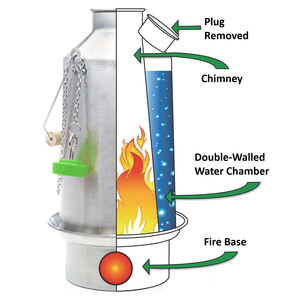
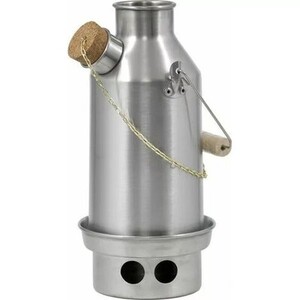
Older Storm kettles are fitted with a cork bung (picture below). Pressure build up has caused boiling water to spray out, so it is strongly advised that any cork bung be changed for a pressure relief or whistle (normally green or orange in colour, pictured above). This will decrease the risk of this happening. This can be purchased separately and retro fitted to any Storm kettle.
Volunteer Responsibilities
With all activities, volunteers should make sure:
- A leader in charge is allocated
- An appropriate risk assessment has been completed before the session
- Active supervision of users is maintained at all times
- Ensure the equipment is checked and clean before use
- Model safe behaviour and make sure clear instructions are given
- Make sure an appropriate first aid kit and fire safety equipment are present
Teaching Tips for Volunteers
- Explain how the kettle works before using it, reviewing the risk assessment with users to increase understanding
- Ask young people to help gather kindling (supervised)
- Talk about fire safety, respect and teamwork
- Use it as a chance to discuss outdoor survival or sustainable fuel use
- Model safe behaviour
Safety Reminders
- Never block the chimney or boil with the bung in
- Only burn natural fuels (no treated wood or plastics)
- Keep hair tied back and avoid loose clothing, including scarves, near flames
- Have water or fire safety equipment nearby
- Burns - Cool using water for a minimum of 20 mins. Seek medical attention as soon as possible
Safe Use Guidance
- Choose a clear, flat area away from overhanging branches
- Create a designated fire area
- Remove the bung as per the notes above
- Fill with water before lighting
- Place small kindling in the fire base
- Sit the kettle over the fire base
- Light carefully through the side airhole
- Add fuel via the chimney top only once flames are visible, minding your fingers as you do
- Only add small bits of fuel to produce enough heat to boil water
- Monitor constantly. Never leave the kettle unattended
- Only those trained should feed the fire
- Keep faces and hands away from the chimney
- Once boiled, use gloves to remove the kettle
- Pour slowly and carefully using the handle and chain to tip the kettle
- Let it cool fully before refuelling or refilling
- Allow all parts to cool fully
- Dispose of ash safely into a metal bin or damp ground
- Rinse and dry kettle
- Store equipment in a dry place
- Discuss with young people about what they learned